
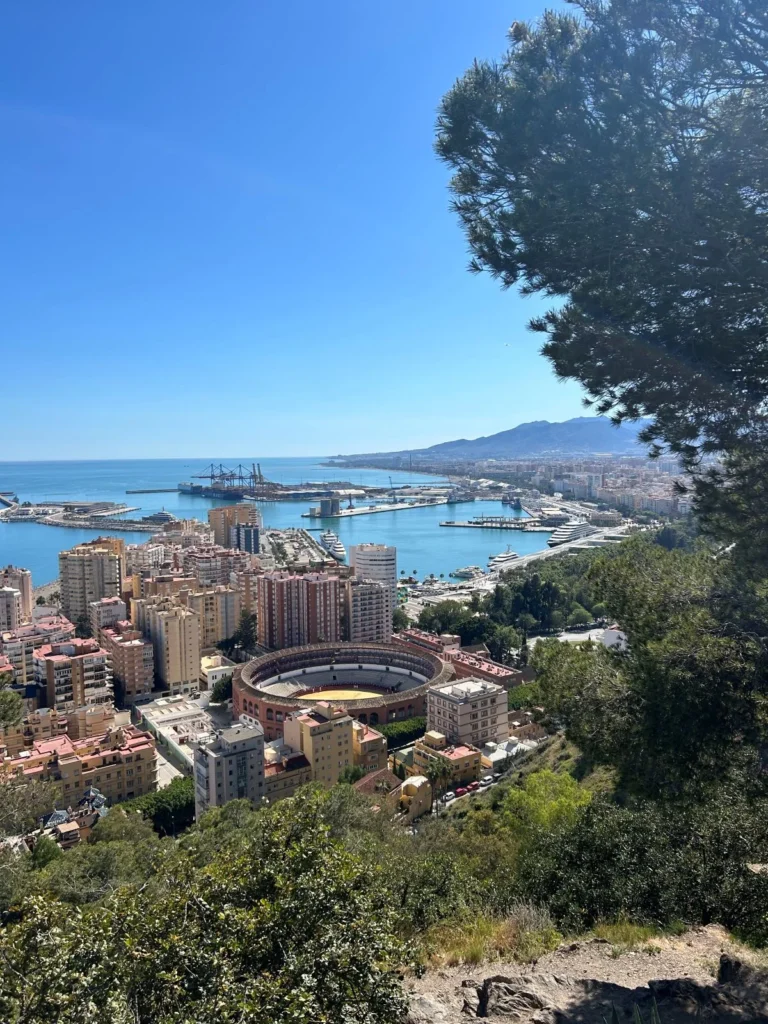
Málaga is one of the most affordable cities in Spain — and if you know where to look, you can fill an entire trip with world-class experiences without spending a cent. From a 2,000-year-old Roman theatre to cutting-edge modern art, from Moorish fortresses to some of the best street art in Europe — a huge amount of what makes Málaga special is completely free.
This guide is written by our local guides who lead walking tours through Málaga every day. We know exactly what’s worth your time and what isn’t. We also know that the best things in Málaga are rarely the ones with the longest queues or the biggest entrance fees.
Whether you’re travelling on a budget, looking to stretch your money further, or simply want to experience the city the way locals do. In short, this is the list you need.
Jump To Section
- Take a Free Walking Tour of Málaga
- Visit the Roman Theatre
- Explore the Soho Street Art District
- Walk Calle Larios
- Discover Plaza de la Merced and Picasso’s Birthplace
- Spend the Day at La Malagueta Beach
- Walk the Muelle Uno Harbour Promenade
- Visit the Carmen Thyssen Museum — Free Sunday Entry
- Explore Mercado de Atarazanas
- Walk Up to the Alcazaba Viewpoint — Free
- Visit the Museo de Málaga — Free Entry
- Relax in the Jardines de Pedro Luis Alonso
- Watch the Sunset from Gibralfaro
- Wander the Historic Centre
- Visit the Picasso Museum — Free Sunday Entry
- Practical Tips for Free Travel in Málaga
1. Take a Free Walking Tour of Málaga
The best introduction to the city
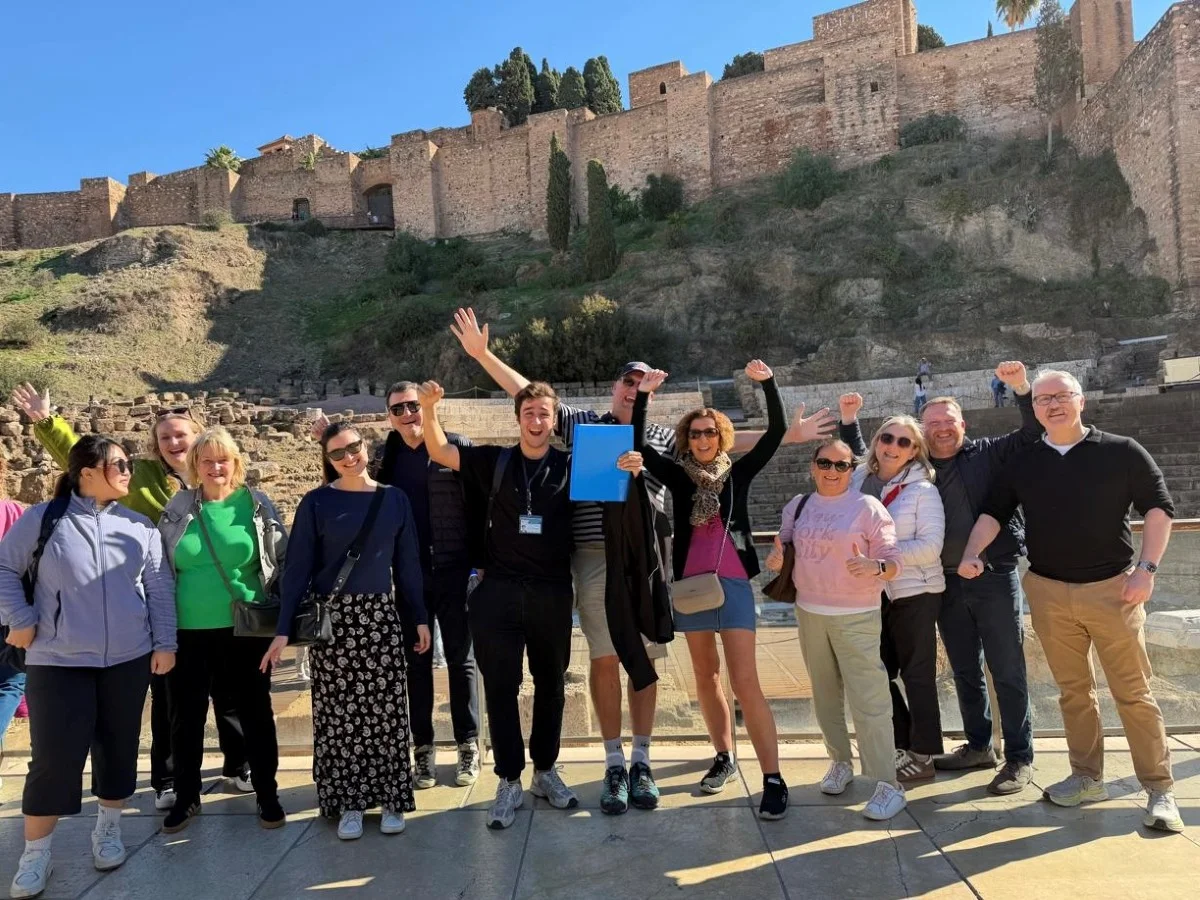
The best thing you can do in Málaga — free or otherwise — is join a Free Walking Tour of Málaga. In under two hours you’ll cover the Cathedral, Calle Larios, Picasso’s birthplace, the Roman Theatre and the Alcazaba with a licensed local guide who brings the city’s 3,000 years of history to life in a way no guidebook or audio tour can match.
Our free tour of Málaga’s historic centre departs daily from Plaza de la Constitución. There’s no booking fee and no fixed price — you pay what you think the tour was worth at the end. It’s consistently rated the highest experience in the city on GuruWalk and FreeTour.com, and it’s the one thing on this list we’d recommend to absolutely anyone visiting Málaga.
Why does a free tour make such a difference? After all, context transforms a city. Without it, the Roman Theatre is a pile of old stones. With a good guide explaining how it was buried and forgotten for a millennium before being accidentally rediscovered in 1951, it becomes one of the most remarkable stories you’ve ever heard. Málaga is full of stories like that — and free walking tours are how you access them.
Local tip: Book your spot in advance. Our tours fill up quickly, especially in spring and summer. The morning departure is best — quieter streets, better light and the whole day ahead of you.
2. Visit the Roman Theatre of Málaga
A 2,000-year-old monument hiding in plain sight — and completely free to see
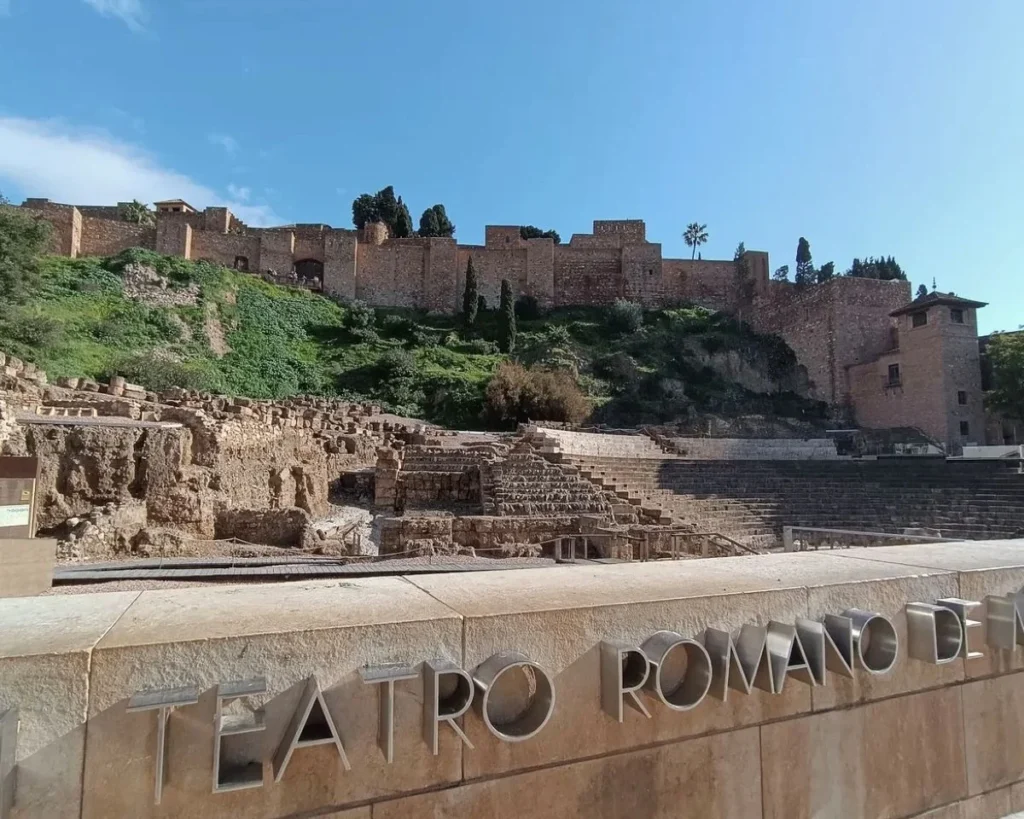
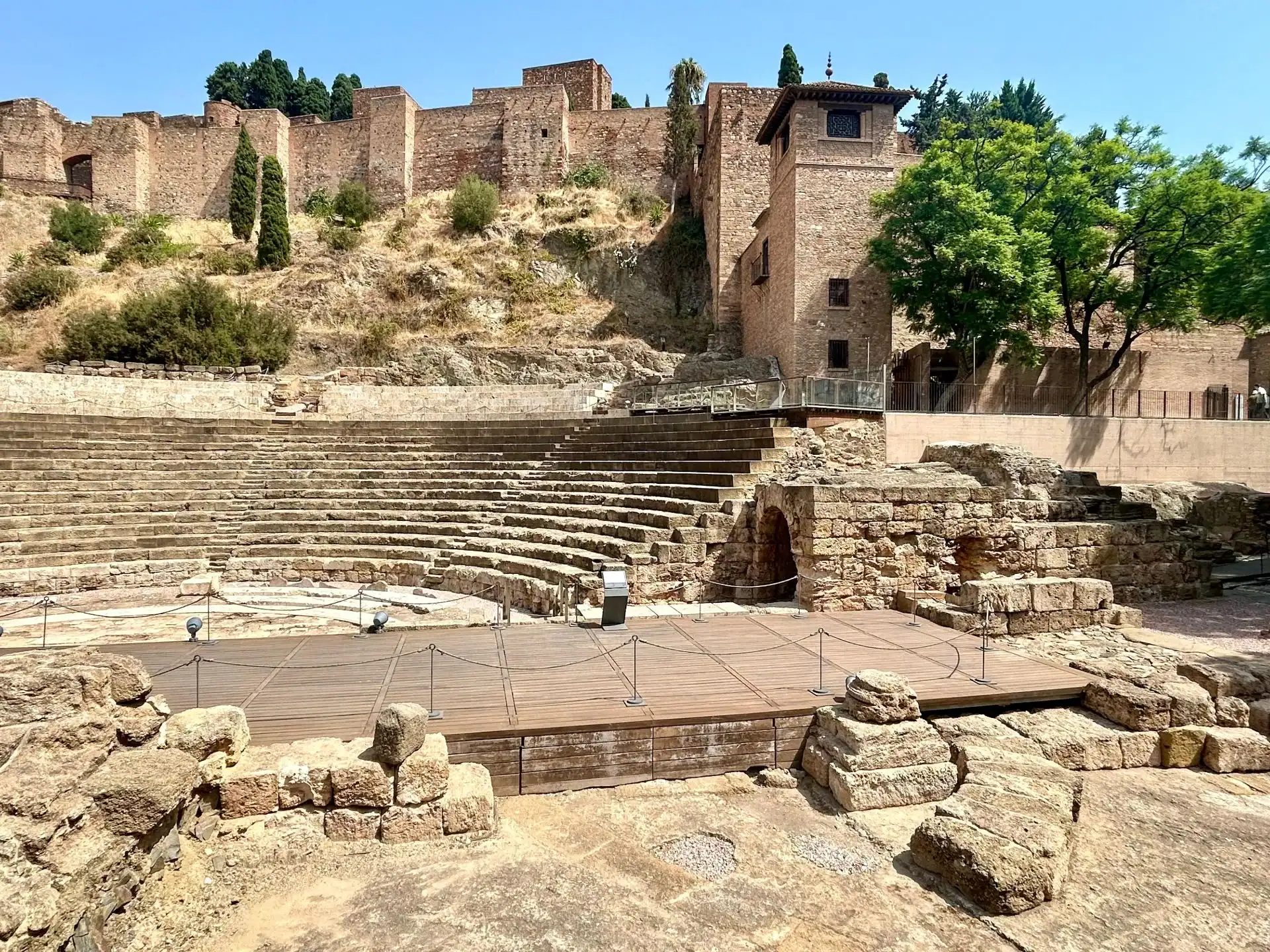
The Roman Theatre of Málaga is one of the most remarkable free attractions in Spain. Dating back to the 1st century BC, this open-air theatre once seated over 2,000 spectators watching plays, political speeches and public events. Then it was buried — completely forgotten under centuries of construction — and only rediscovered by accident in 1951 during building works at the foot of the Alcazaba.
Remarkably, today it sits in the open air at the base of the hill, free to see from the outside at any time, with a small interpretation centre that tells the full story of its discovery and restoration. As a result, spending just 20 minutes here means you’ll leave with one of the best stories from your entire trip.
The theatre is also the perfect starting point for a visit to the Alcazaba above. Also, the contrast between the ancient Roman stones and the Moorish fortress built directly on top of them (using, in many cases, stones taken from the theatre itself) is one of the most vivid illustrations of Málaga’s layered history.
For the full story of the Roman Theatre and Alcazaba together, join our Free Tour Alcazaba Málaga & Roman Theatre.
Local tip: The interpretation centre at the theatre is free and air-conditioned — worth stepping into on a hot afternoon even if you’ve already seen the ruins from outside.
3. Explore the Soho Street Art District
One of the best open-air street art galleries in Europe — entirely free
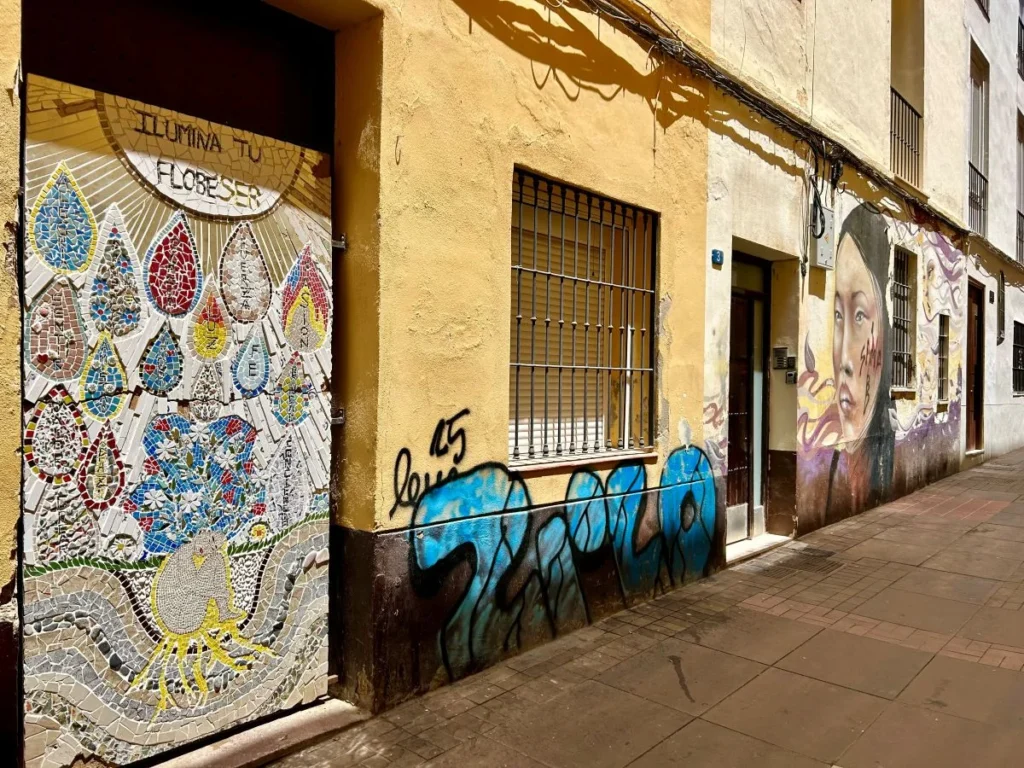
Málaga’s Soho district has undergone one of the most remarkable urban transformations in Spain over the past decade. What was once a forgotten neighbourhood south of Alameda Principal is now home to some of the most impressive street art in Europe — and every bit of it is free to see.
The MAUS project (Málaga Arte Urbano Soho) has commissioned internationally recognised street artists to paint entire building facades across the district. As a result, the murals are extraordinary. They turn an ordinary walk through the neighbourhood into something genuinely memorable. New pieces are added regularly, so even if you’ve visited before, the district changes.
The best murals are concentrated between Calle Trinidad Grund, Calle Tomás Heredia and Calle Córdoba. Give yourself at least an hour to wander without a map. The best discoveries happen when you turn a corner unexpectedly.
In addition, the Soho district has some of the best independent cafés and bars in Málaga, making it the ideal neighbourhood for a mid-morning coffee or a late afternoon drink after a day of sightseeing.
Local tip: Go on a weekday morning when the streets are quietest and the light is best for photos. The murals face different directions so the light quality on individual pieces changes dramatically through the day.
4. Walk Calle Larios — Málaga's Most Famous Street
The most elegant street in southern Spain — and completely free to walk
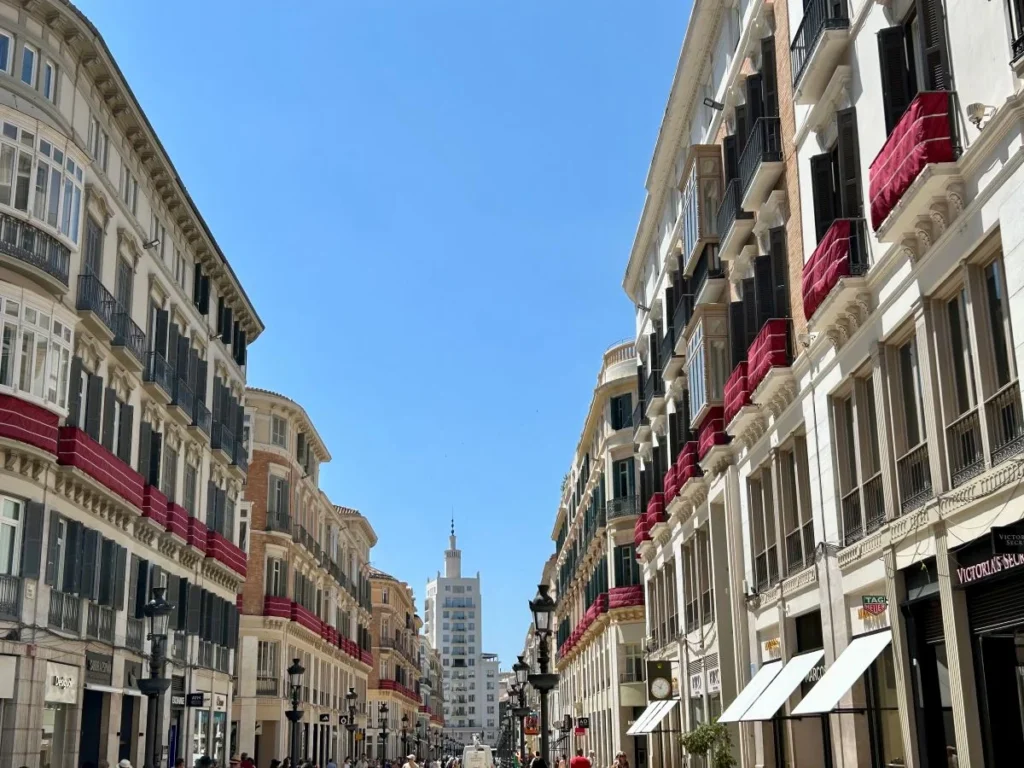
Calle Larios is Málaga’s most iconic street — a grand 19th-century boulevard lined with neoclassical facades, high-end shops and the kind of atmosphere that makes you want to slow down. It’s free to walk, free to photograph and one of the most pleasant streets in Spain to simply exist on.
Named after the Larios family — the industrialists who shaped modern Málaga and whose name is on everything from the street to Spain’s most famous gin — it’s a living piece of the city’s history. The story of how the Larios family built their empire and what they did with it is one of the most fascinating local stories in Málaga. Your guide will tell you the full version on the free walking tour.
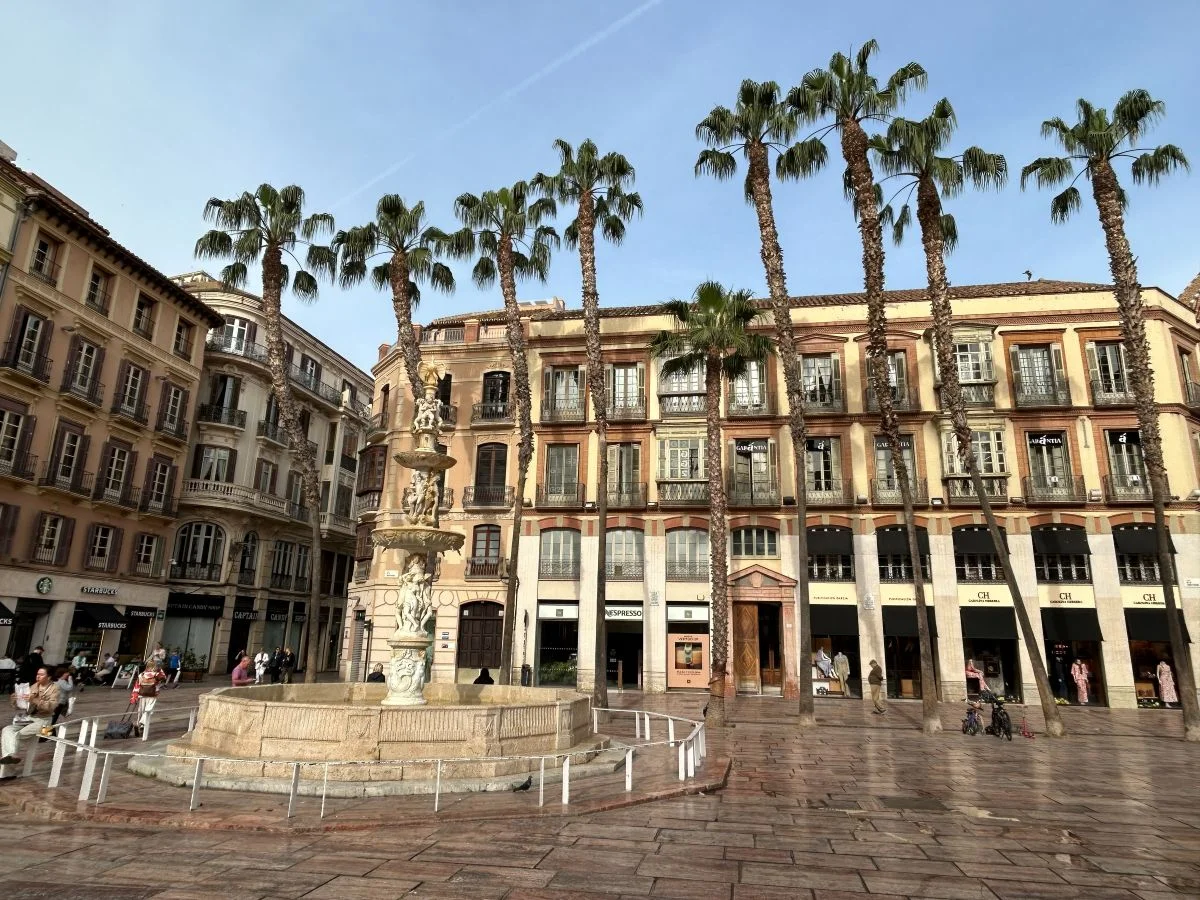
Just as importantly, at the Cathedral end of Calle Larios sits Plaza de la Constitución — Málaga’s main square, the heart of the city’s public life.. Sit at one of the outdoor terraces, order a coffee and watch the city go by.
Local tip: Come back in the evening when the street fills with locals on their paseo. It’s one of the most authentically Spanish things you can experience in Málaga — families, couples, elderly neighbours, teenagers — the whole city walking the same street together as the temperature drops.
5. Discover Plaza de la Merced and Picasso's Birthplace
The square where the world's most famous artist was born — free and full of local life
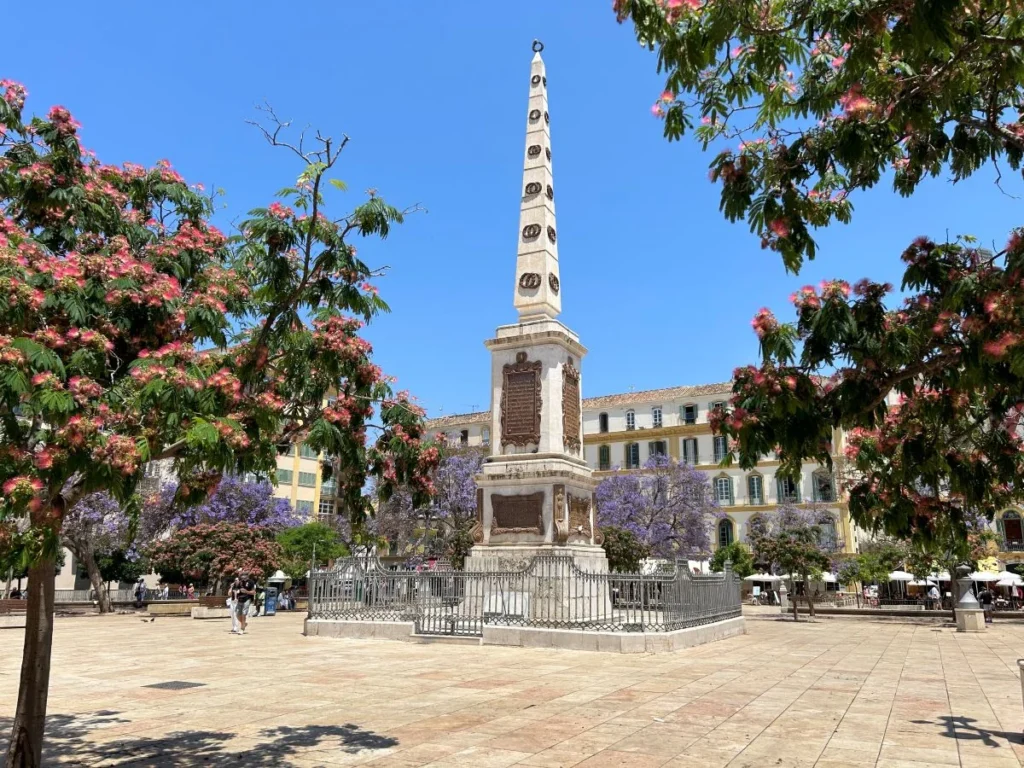
Plaza de la Merced is one of the great public squares of southern Spain — and almost entirely off the tourist trail despite being a five-minute walk from the Cathedral. Tree-lined, shaded by enormous ficus trees that have been growing here for over a century, with a long central promenade and benches occupied by locals at all hours of the day — it’s one of the most pleasant places to simply sit in Málaga.
On the north side of the square stands the Casa Natal de Picasso — the apartment building where Pablo Picasso was born on 25 October 1881. The museum inside charges an entrance fee. However, the square itself is completely free, and standing in front of the building where the world’s most famous artist was born — in the same light, looking at the same Alcazaba on the hill behind — is one of those simple, free moments that stays with you.
Moreover, the square is also home to the obelisk to General Torrijos — one of the most dramatic stories in 19th-century Málaga history, and one that connects directly to the Cathedral and the city’s political past. Ask your guide on the free walking tour for the full version.
Local tip: The terrace bars on the south side of the square are among the most affordable in the centre — good wine, good people-watching, zero tourist markup.
6. Spend the Day at La Malagueta Beach
Málaga's city beach — free, beautiful and 15 minutes from the historic centre
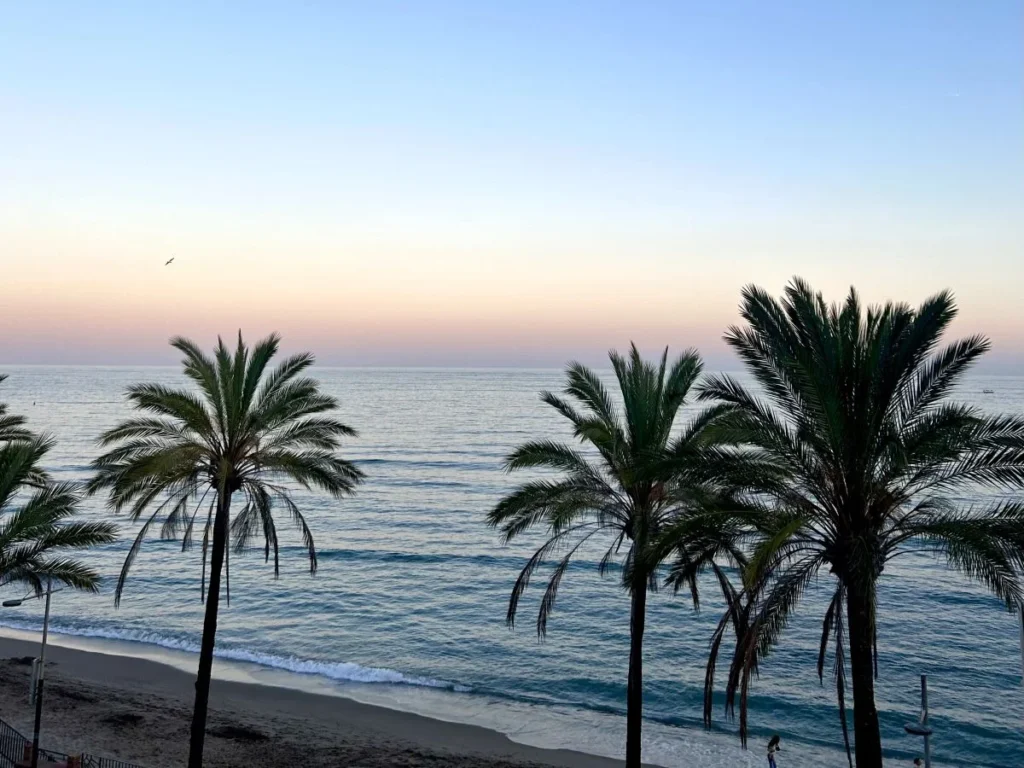
La Malagueta is Málaga’s main city beach — a long stretch of dark volcanic sand and calm Mediterranean water just 15 minutes on foot from the historic centre. It’s one of the few city beaches in Spain where you can spend a full day without feeling like you’re in a tourist trap — and it’s completely free.
The water is calm, clean and swimmable from late May through October. Sun loungers and parasols are available to rent (not free). However, the beach itself costs nothing. The chiringuitos (beach bars) along the front are some of the best in the city — especially for espetos, the sardines grilled over open fires on the beach that are one of Málaga’s most iconic food traditions.
Beyond the beach itself, La Malagueta is also the starting point for a beautiful coastal walk east along the Paseo Marítimo toward the Baños del Carmen. This is a historic bathing area with a terrace restaurant and one of the most scenic stretches of seafront in the city.
Local tip: Go in the morning before 11am or after 5pm in summer — the beach is significantly quieter and the light is softer. The best espetos are served at the traditional chiringuitos (the ones built on the sand, not the concrete terraces)
7. Walk the Muelle Uno Harbour Promenade
Málaga's waterfront at its most beautiful — free to walk any time
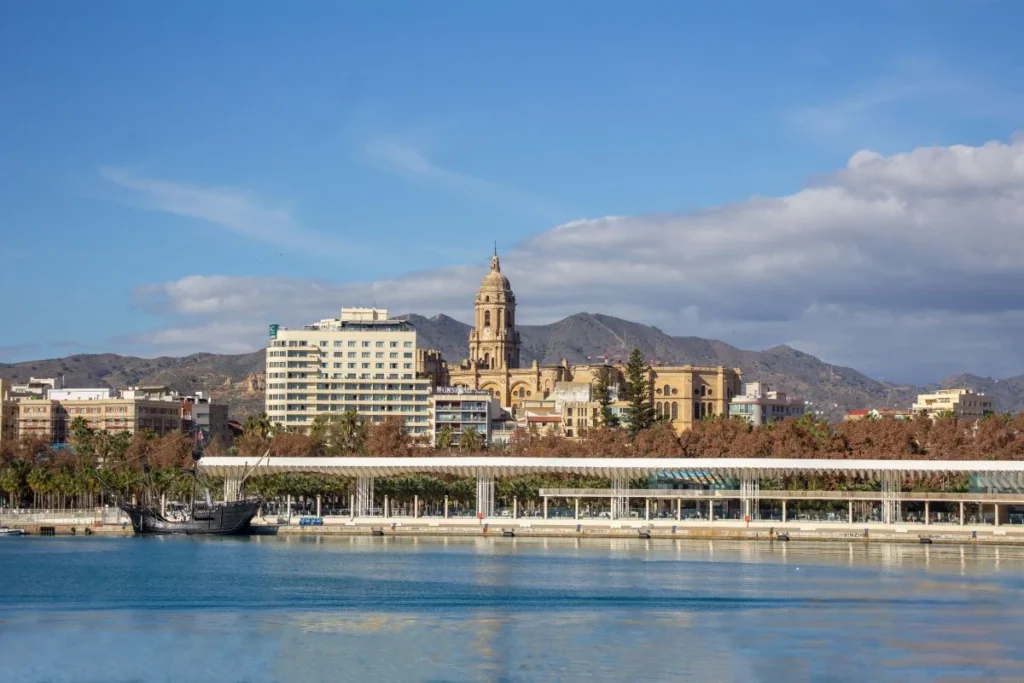
Muelle Uno is Málaga’s harbour promenade — a beautifully designed waterfront walkway stretching from the city centre along the port, past the old lighthouse and out toward the Centre Pompidou. It’s the best evening walk in the city and costs absolutely nothing.
The promenade has restaurants, shops and bars along its length, but the walk itself is free. In particular, go at sunset — the light over the Mediterranean from the end of the pier is one of the most beautiful things in Málaga, and completely free to experience.
The old lighthouse (Farola de Málaga) at the end of the pier is a Málaga landmark and one of the best spots in the city for photos of the skyline with the Alcazaba and Gibralfaro Castle in the background.
Local tip: Walk the full length of Muelle Uno to the Centre Pompidou glass cube at the far end — the building itself is striking from the outside and free to see. The exterior alone is worth the ten-minute walk.
8. Visit the Carmen Thyssen Museum — Free on Sunday Evenings
World-class Spanish art in a stunning Renaissance palace — free every Sunday from 5pm
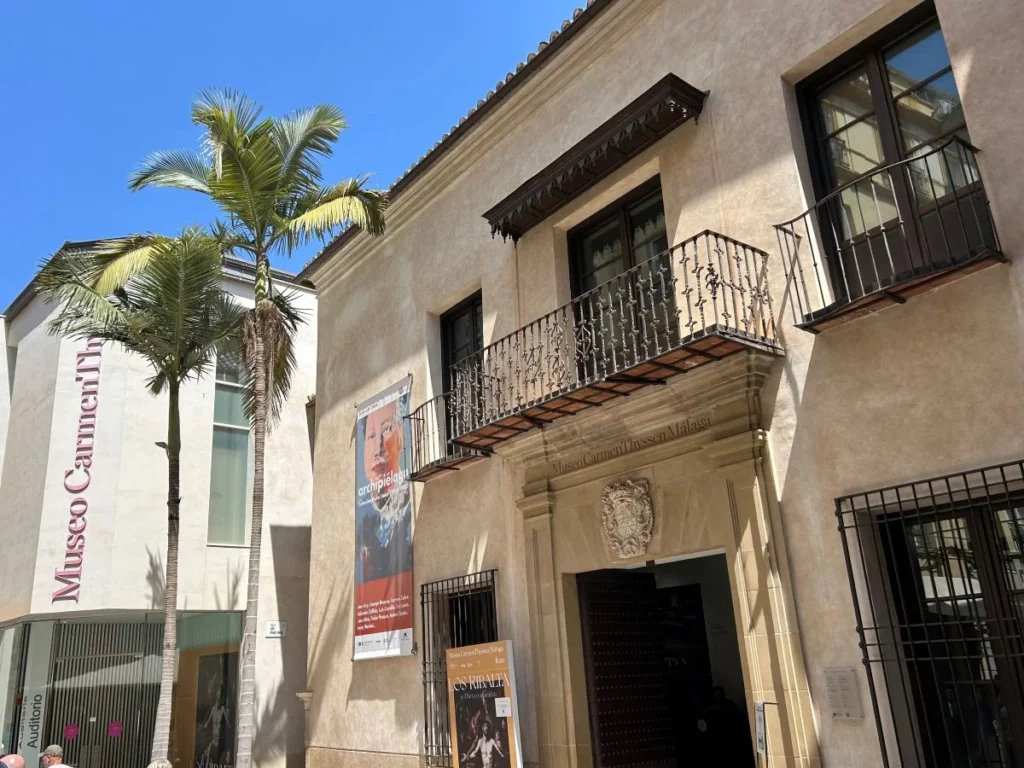
The Carmen Thyssen Museum Málaga is one of the most underrated art museums in Spain — and every Sunday from 4pm, the permanent collection is completely free.
Housed in the beautifully restored 16th-century Palacio de Villalón in the heart of the historic centre, it contains Baroness Carmen Thyssen-Bornemisza’s personal collection of 19th-century Spanish and Andalusian painting — over 230 works covering costumbrismo, romanticism and orientalism. Even if you have no particular interest in Spanish art history, the building alone is worth the visit — a stunning Renaissance palace with an extraordinary central courtyard.
To take advantage of this, the Sunday free entry runs from 4pm to closing time (usually 8pm). It gets busy — arrive at 5pm if you want a quieter experience.
Local tip: Combine free Sunday entry at the Carmen Thyssen with the evening paseo on Calle Larios and tapas afterwards for one of the best free evenings you can spend in Málaga.
9. Explore Mercado de Atarazanas
The most atmospheric market in Málaga — free to browse any time
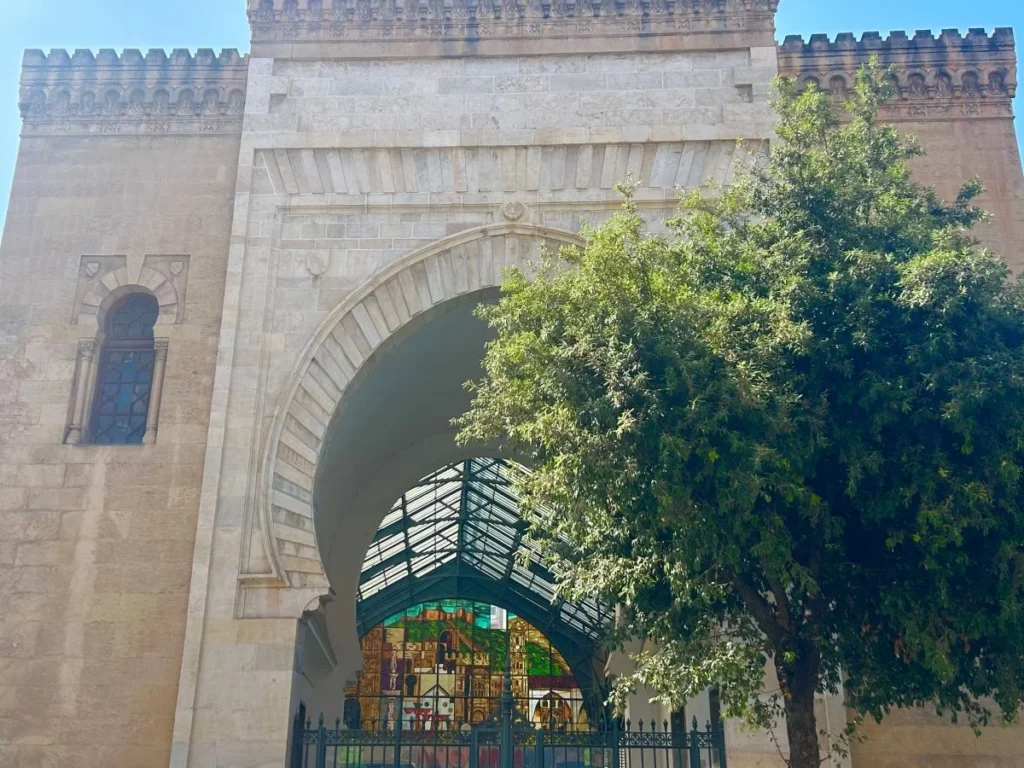
Mercado de Atarazanas is free to enter and one of the most sensory experiences in Málaga. Built around and through a 14th-century Moorish gateway — the last surviving remnant of the city’s ancient shipyard — the market is where Málaga locals actually shop.
Fresh fish, seasonal produce, local cheeses, Iberian ham, olives, seafood and spices — all sold by vendors who’ve been here for generations. The building itself is extraordinary: the contrast between the medieval Moorish archway and the colourful market stalls inside is unlike anything else in the city. The famous stained glass window at the back of the market, depicting scenes from Málaga’s history, is one of the most beautiful pieces of public art in the city.
Of course, you don’t need to buy anything to enjoy it. Walk through, look around, soak up the atmosphere. That said, if you do want to eat, the bars at the market counters serve some of the freshest seafood in the city at very reasonable prices.
Local tip: Go between 10am and 1pm on a weekday — busy enough to feel alive, quiet enough to look around properly. The market closes at 2pm and is shut on Sundays.
10. Walk Up to the Alcazaba Viewpoint — Free
The best free viewpoint over Málaga — no entrance ticket needed
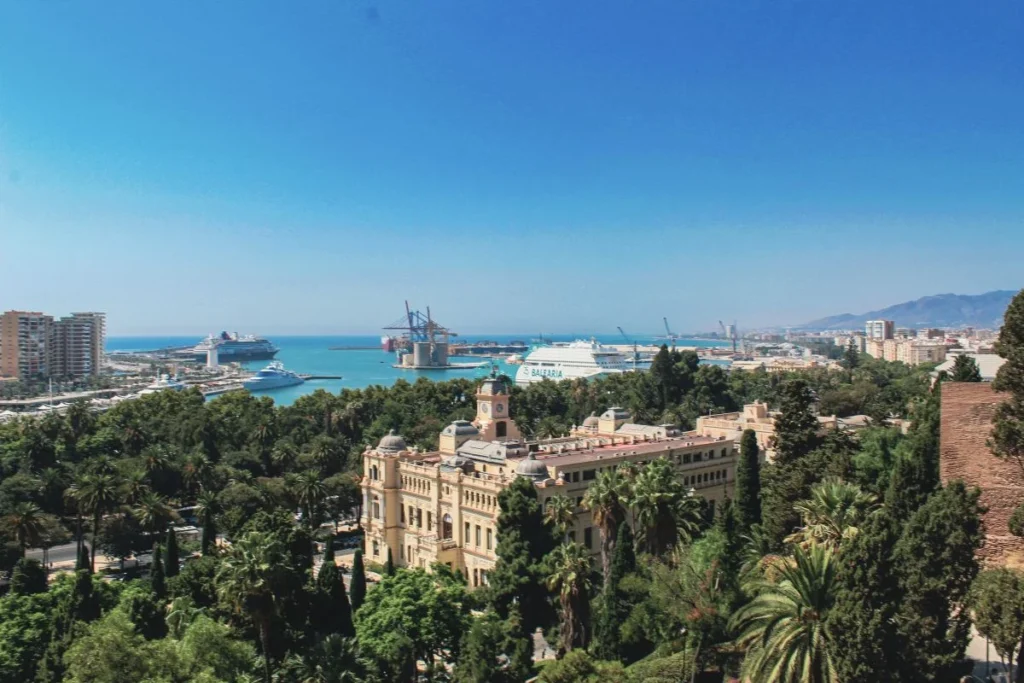
The Alcazaba itself costs €7 to enter — but the path that winds up the hill beside it is completely free, and it leads to one of the best viewpoints over Málaga you’ll find anywhere in the city.
To get there, walk up the zigzag path from the Roman Theatre, past the outer walls of the Alcazaba, and you’ll reach a series of terraces with panoramic views over the historic centre, the port and the Mediterranean. You’re outside the paid entrance area the entire way — and the views are genuinely excellent.
This is also the path you’d take to continue up to Gibralfaro Castle above — another free viewpoint (the castle itself costs €3.50 to enter, but the path and the views from outside are free).
Local tip: This walk is best in the early morning when it’s cool and the light is soft. Take water if you’re going all the way up to Gibralfaro — there’s no drinking fountain on the path.
11. Visit the Museo de Málaga — Free Entry
One of the largest museums in Andalusia — and one of the most overlooked
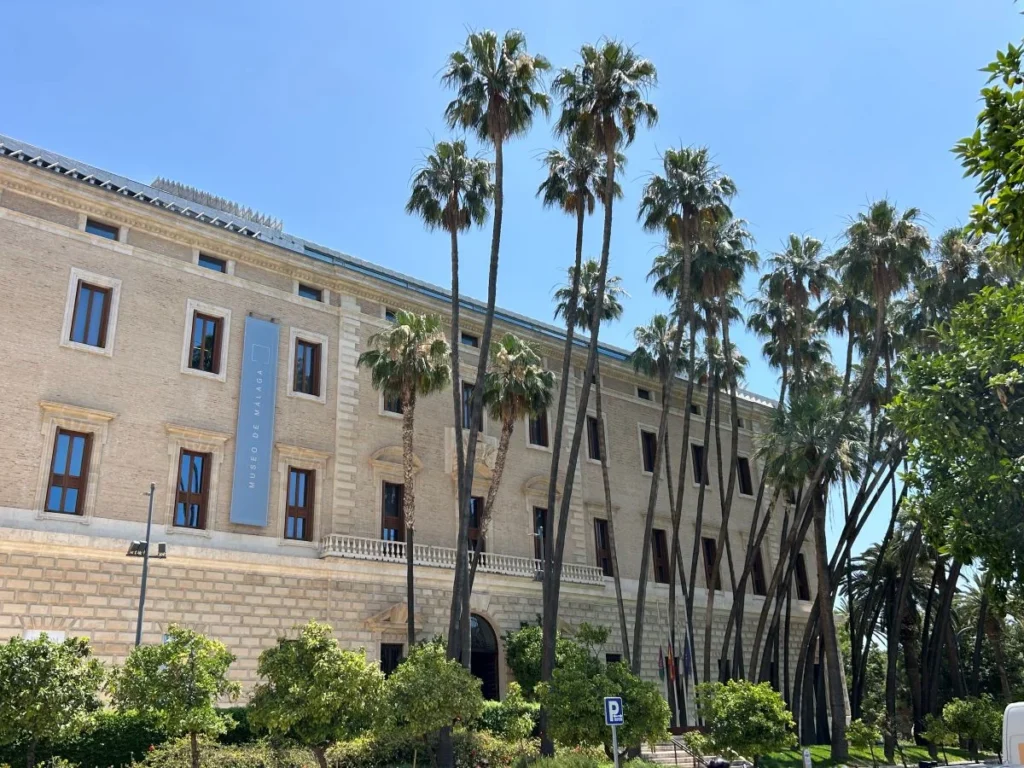
The Museo de Málaga is one of the city’s best kept secrets and one of the most significant museums in southern Spain. It’s housed in the beautifully restored Palacio de la Aduana — the old customs palace — right on Plaza de la Aduana between the Alcazaba and the harbour. The museum contains two outstanding permanent collections: an archaeology section tracing Málaga’s history from prehistoric times through the Phoenician, Roman and Moorish periods, and a fine arts section spanning centuries of painting and sculpture.
Best of all, entry is free for EU citizens. Non-EU visitors pay around €1.50 — making it one of the best value cultural experiences in the city for everyone.
Surprisingly, despite its size, it’s consistently one of the quietest museums in Andalusia — even in peak season you’ll often have entire rooms to yourself. The central courtyard of the Palacio de la Aduana alone is worth the visit.
Local tip: Combine the Museo de Málaga with the Jardines de Pedro Luis Alonso next door and the Roman Theatre a few minutes’ walk away — this corner of the city packs more history into a small area than almost anywhere else in Málaga.
12. Relax in the Jardines de Pedro Luis Alonso
Málaga's most beautiful formal garden — free, shaded and right in the city centre
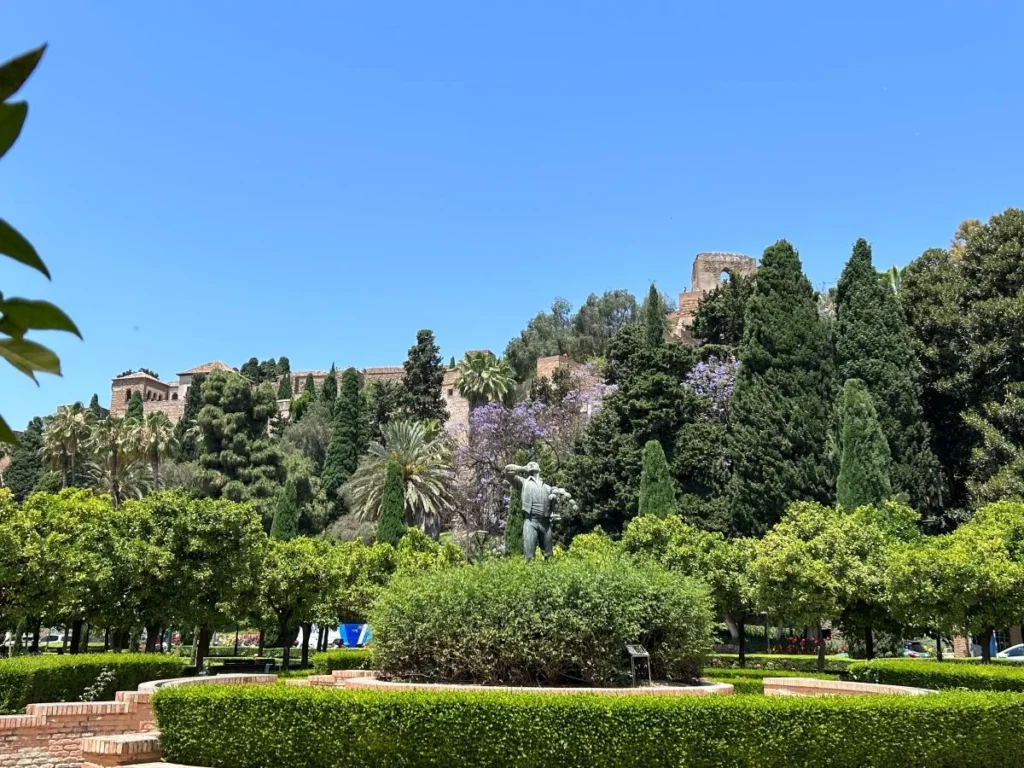
Tucked between the Museo de Málaga, the Town Hall and the foot of the Alcazaba hill, the Jardines de Pedro Luis Alonso are one of the most quietly beautiful free spaces in the city — and almost entirely off the tourist radar.
Designed in 1945 in a formal Mediterranean style that blends Hispanic-Muslim and French influences, the gardens cover 6,500 square metres of sculpted hedgerows, lily ponds, fountains, orange trees and flower beds — including a rose garden with 75 varieties from around the world. At the centre stands the statue of El Biznaguero — the traditional Málaga flower seller, a symbol of the city. The Alcazaba walls rise directly behind, giving the whole space an extraordinary backdrop.
It’s one of the best spots in Málaga to sit in the shade on a hot afternoon, let the city noise fade out and simply do nothing for half an hour. Completely free, open every day, and genuinely lovely.
Local tip: The gardens connect naturally with the Parque de Málaga along the waterfront — together they make one of the best free walking routes in the city, from the foot of the Alcazaba all the way to the harbour.
13. Watch the Sunset from Gibralfaro
The best sunset viewpoint in Málaga — free from the outside
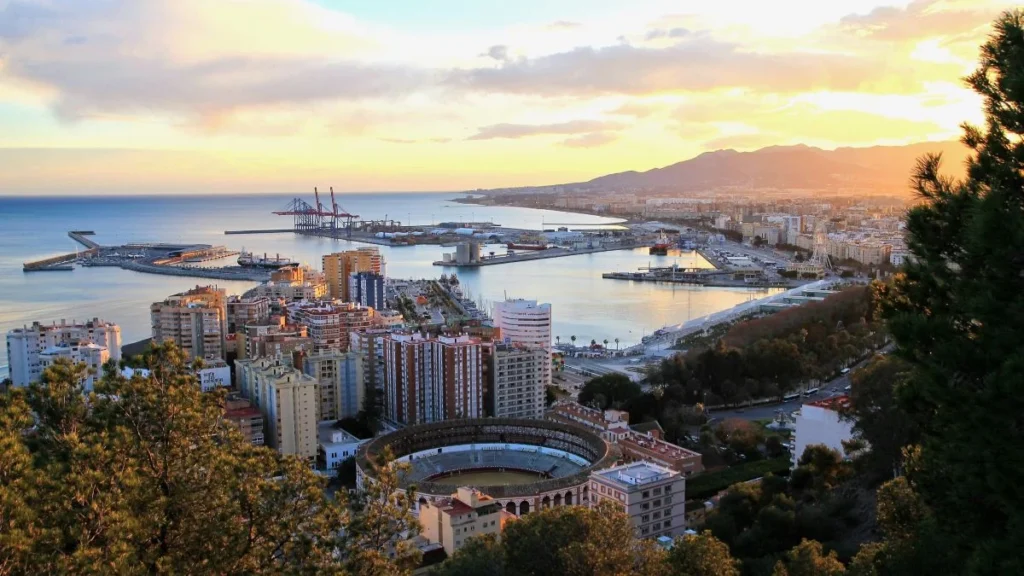
Gibralfaro Castle charges €3.50 to enter — but the path up to the castle and the viewpoints immediately outside the walls are completely free. And the sunset from Gibralfaro is one of the most beautiful things in Málaga.
As the sun drops over the city, the light turns golden over the bullring, the port and the Mediterranean. On a clear evening you can see the outline of the Atlas Mountains of Morocco on the horizon across the water. Ultimately, it’s the kind of moment that costs nothing and stays with you.
The walk up from the historic centre takes about 25–30 minutes through pine forest. Take water and wear comfortable shoes. The small bar just outside the castle entrance sells cold drinks and has outdoor seating with the view. A cold beer at sunset here is one of the great simple pleasures of any Málaga trip.
Local tip: Aim to arrive 30–40 minutes before sunset for the best light. In summer the sun sets after 9pm; in winter closer to 6pm — check the time for your visit date before you head up.
14. Visit the Picasso Museum — Free on Sunday Evenings
The world's most famous artist — free to see on Sunday evenings and select dates
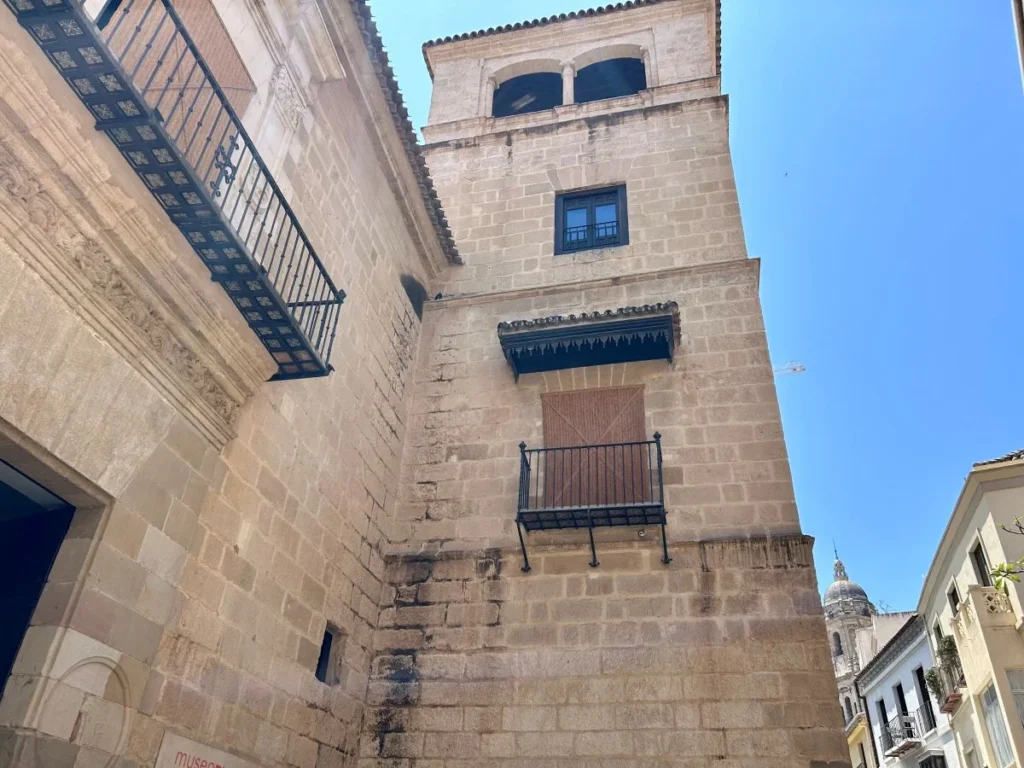
The Picasso Museum Málaga normally charges €12 admission — but it offers free entry during the last two hours of opening every Sunday. It’s also free on Día de Andalucía (28 February), International Museum Day (18 May) and World Tourism Day (27 September).
Housed in the 16th-century Buenavista Palace, the museum contains over 200 works spanning Picasso’s entire career, donated largely by his daughter-in-law and grandson. However, what makes it special beyond the art is the building itself. As you move through the rooms, original Phoenician and Roman archaeological remains discovered during restoration are visible beneath your feet. Ancient history and 20th-century art in the same space.
If possible, you can time your visit to a Sunday evening, you’ll experience one of the finest art museums in Spain for free. Arrive right at the free entry start time — it fills up quickly.
Local tip: Check the museum’s official website before your visit for the exact free entry hours — they can vary seasonally. Combining it with the Carmen Thyssen Museum free entry on the same Sunday makes for an outstanding free afternoon of art in the city.
15. Wander the Historic Centre
The best free activity in Málaga — no plan, no map, no itinerary
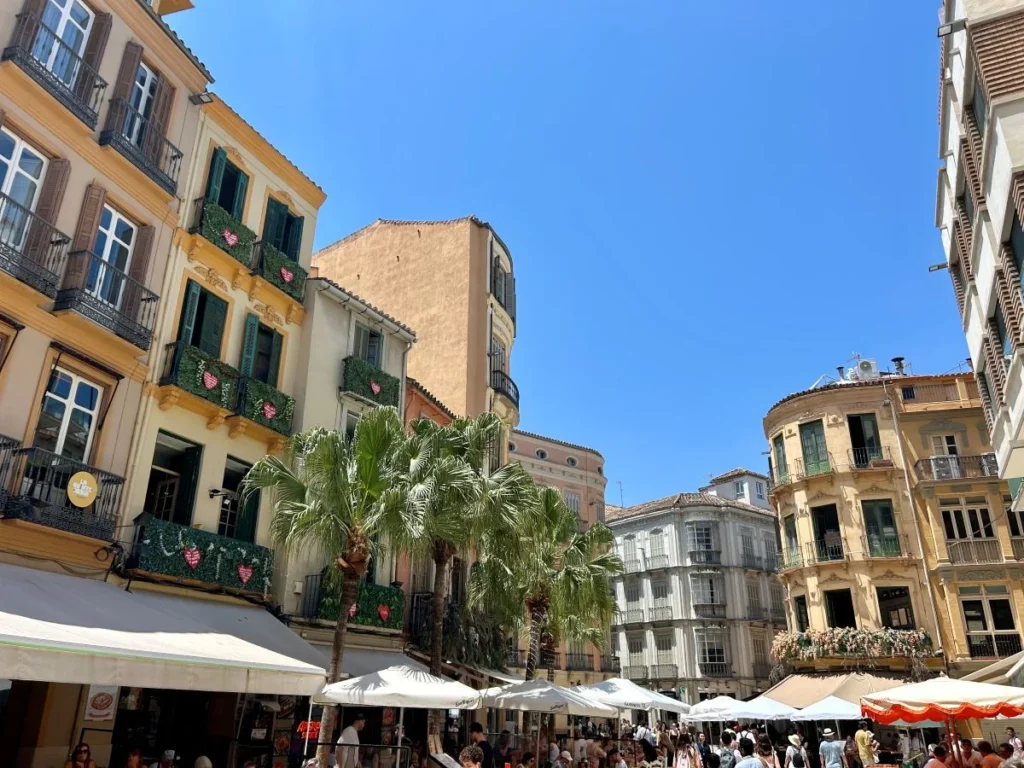
The most honest recommendation on this list: just walk. Málaga’s historic centre is one of the most beautiful and rewarding urban spaces in southern Spain, and much of what makes it special costs nothing at all. The narrow streets between the Cathedral and Plaza de la Merced, the tiny squares hidden between buildings, the orange trees, the tiled doorways, the smell of coffee and jasmine — none of this costs anything.
Get off the main tourist streets — Calle Larios, Calle Marqués de Larios — and into the neighbourhood behind. Calle Santa María, Calle San Agustín, Calle Alcazabilla — streets that most visitors walk past without turning into. The best Málaga is always one corner away from the obvious route.
If you’ve done the free walking tour on your first morning, you’ll already have a mental map of where things are and the confidence to wander freely. If you haven’t — do that first. It changes everything.
Local tip: Check the museum’s official website before your visit for the exact free entry hours — they can vary seasonally. Combining it with the Carmen Thyssen Museum free entry on the same Sunday makes for an outstanding free afternoon of art in the city.
Practical Tips for Free Travel in Málaga
Making the most of Málaga on a budget
Free museums and attractions
- Museo de Málaga — free for EU citizens; €1.50 for non-EU
- Carmen Thyssen Museum — free Sundays from 5pm
- CAC Málaga (Contemporary Art Centre) — always free
- Picasso Museum — free last two hours every Sunday; also free on 28 Feb, 18 May and 27 Sept
- Roman Theatre — free from outside at all times
- Soho street art district — always free
- All public beaches, squares and promenades — always free
- Jardines de Pedro Luis Alonso — always free
- Alcazaba and Gibralfaro viewpoints (outside walls) — free
What costs money but is worth it
- Alcazaba interior — €7
- Picasso Museum (non-free days) — €12, book online
- Free walking tour — pay what you think it was worth; €10–15 per person is the norm and goes directly to your guide
Eating cheaply
- Mercado de Atarazanas bar counters — freshest seafood in the city at market prices
- Bocadillo bars around Plaza de la Merced — sandwiches from €2–3
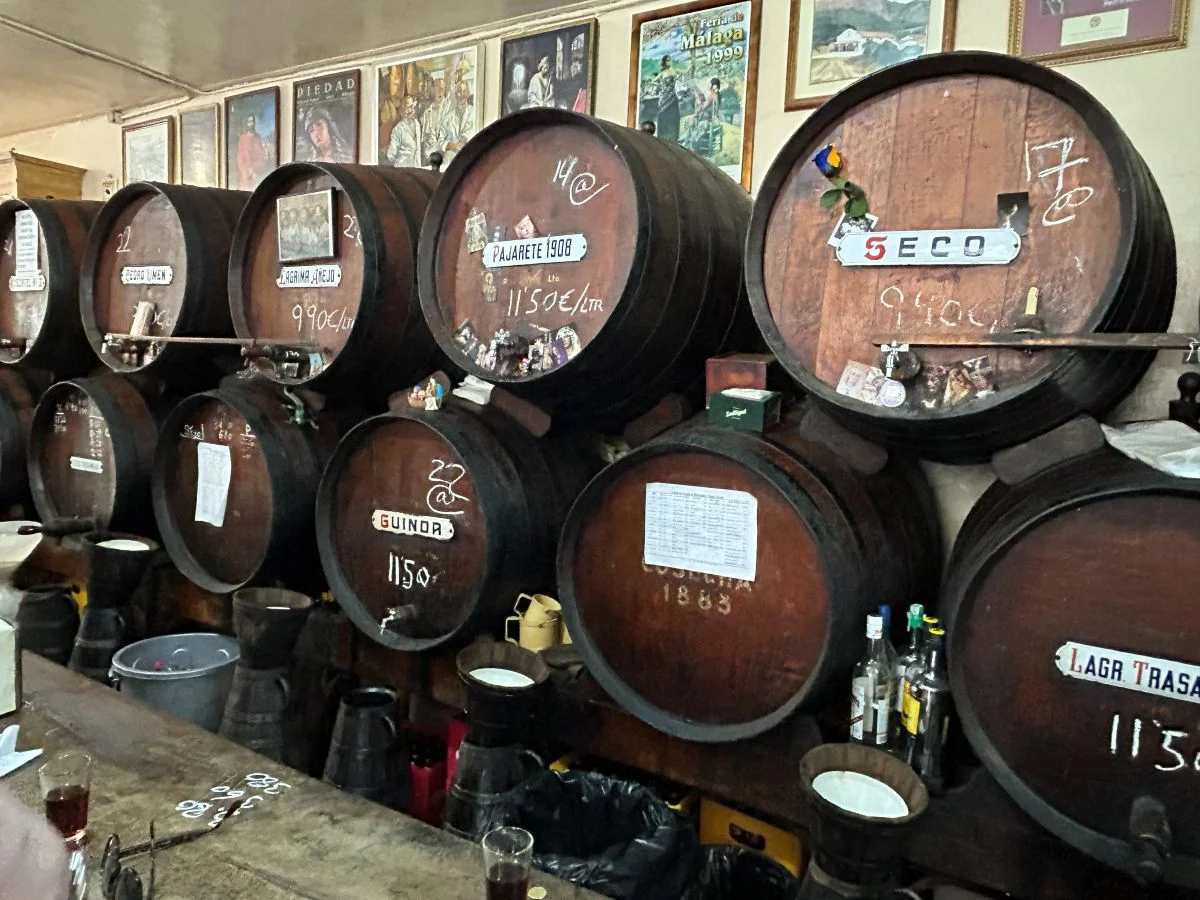
- Traditional bodegas — wine from €1.50 a glass
- Avoid restaurants directly on Calle Larios and around the Cathedral — prices are 30–40% higher than two streets away
Getting around for free
Málaga’s historic centre is entirely walkable. The beach is 15 minutes on foot from the Cathedral. Muelle Uno is 10 minutes. Soho is 10 minutes. The Museo de Málaga, Jardines de Pedro Luis Alonso and Roman Theatre are all within a five-minute walk of each other. You don’t need public transport for anything on this list.
Ready to explore Málaga?
Join one of our tours and see the city with a licensed local guide.
Málaga Free Tour
Málaga's historic centre, 3,000 years of history, one licensed local guide. Our free walking tour covers the Cathedral, Larios Street, Picasso's birthplace and the stories in between. Pay what you think it's worth at the end.
Alcazaba & Roman Theatre Free Tour
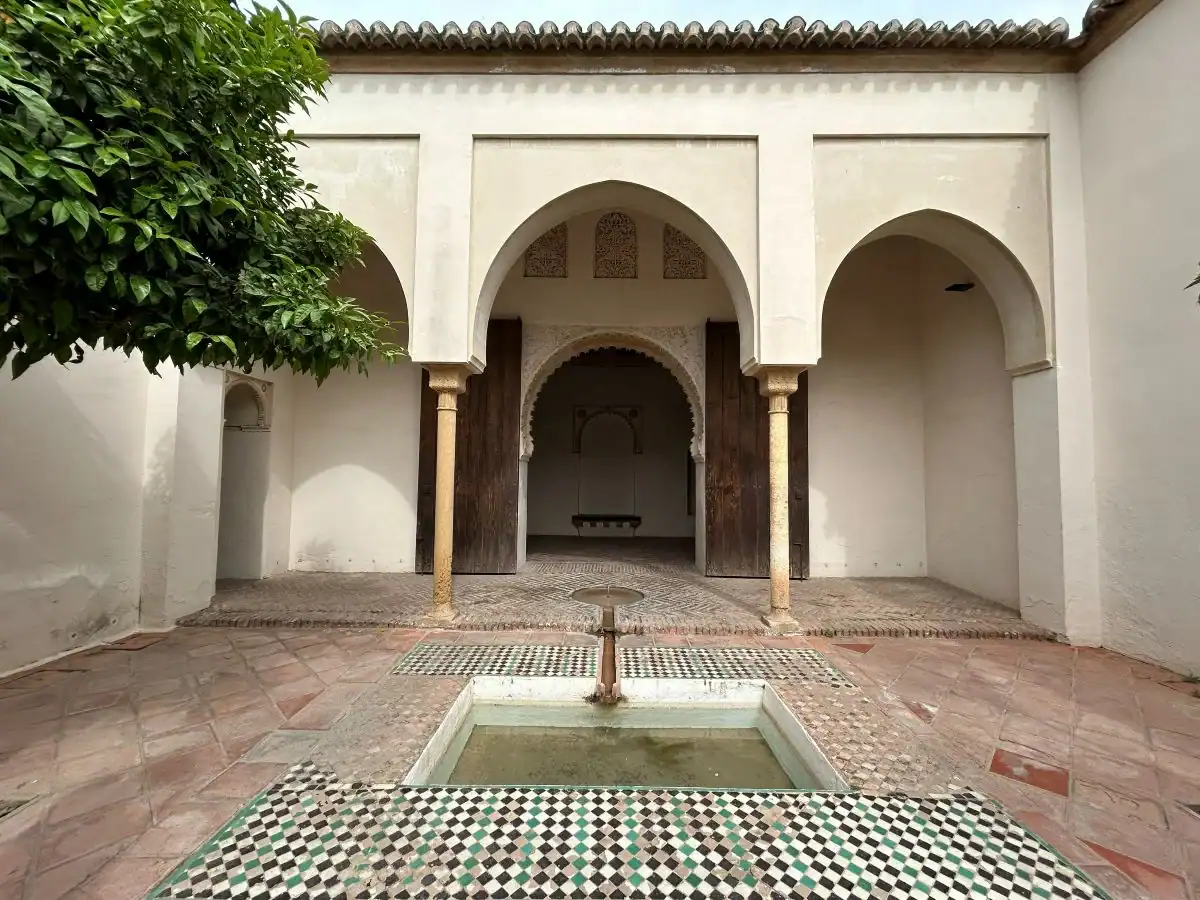
Go inside one of Spain's best-preserved Moorish fortresses and explore the Roman Theatre. Stunning architecture, sweeping panoramic views over Málaga, and stories that go back 1,000 years.
Tapas Tour Málaga
Forget the touristic restaurants on the main square. We take you where locals eat - a guided food tour through Málaga's best tapas bars and restaurants with food and wine included every step of the way.
Private Tour Málaga
Your own personal local guide, your own pace, your own interests. Whether it's history, food, architecture or all three - we customise the perfect private Málaga tour experience around you and your group.
Frequently Asked Questions
What is free to do in Málaga?
Málaga has a huge amount of free content — the Roman Theatre, Soho street art, all public beaches, Muelle Uno harbour promenade, Plaza de la Merced, the Jardines de Pedro Luis Alonso, the Alcazaba viewpoint from outside, Mercado de Atarazanas and a free walking tour of the historic centre. The Museo de Málaga is free for EU citizens, and the Carmen Thyssen and Picasso Museums both offer free entry on Sunday evenings.
Is the Museo de Málaga free?
Yes — the Museo de Málaga is free for EU citizens. Non-EU visitors pay around €1.50. It’s one of the largest and most impressive museums in Andalusia and consistently one of the quietest, even in peak season.
Is Málaga a cheap city to visit?
Yes — Málaga is one of the most affordable cities in Spain. Wine costs €1.50–€2.50 a glass at traditional bodegas, tapas are €2–€4 each, and the majority of the city’s best experiences are free or very low cost.
Is the Alcazaba in Málaga free?
The interior of the Alcazaba costs €7 to enter. The path up the hill beside the Alcazaba and the viewpoints outside the walls are completely free and offer excellent panoramic views over the city.
What is the best free walking tour in Málaga?
Walkie Talkie Tours offers a free walking tour of Málaga’s historic centre departing daily from Plaza de la Constitución. There’s no fixed price — you pay what you think the tour was worth at the end. It’s consistently rated the top experience in the city on GuruWalk and FreeTour.com.