
Two days in Málaga is enough to fall properly in love with the city — if you know how to use them. Most visitors arrive without a plan and end up doing half of what they could, stuck in tourist restaurants around the Cathedral and missing the things that make Málaga genuinely special.
This itinerary is written by our local guides who walk these streets every day. It’s not a highlights reel lifted from a travel magazine — it’s the actual order that makes sense, timed so you’re in the right place at the right time, with none of the tourist traps in between. We’ve also included where to eat, where to stay, and everything you need to know before you arrive.
Jump To Section
- Day 1 Morning – Historic Centre & Free Walking Tour
- Day 1 Afternoon – Alcazaba & Roman Theatre
- Day 1 Evening – Tapas in the Old Town
- Day 2 Morning – Picasso & the Cathedral
- Day 2 Afternoon – Gibralfaro & La Malagueta Beach
- Day 2 Evening – Muelle Uno & Centre Pompidou
- Practical Tips for Your 2 Days in Málaga
Day 1 Morning – Historic Centre & Free Walking Tour
The smartest thing you can do on your first morning
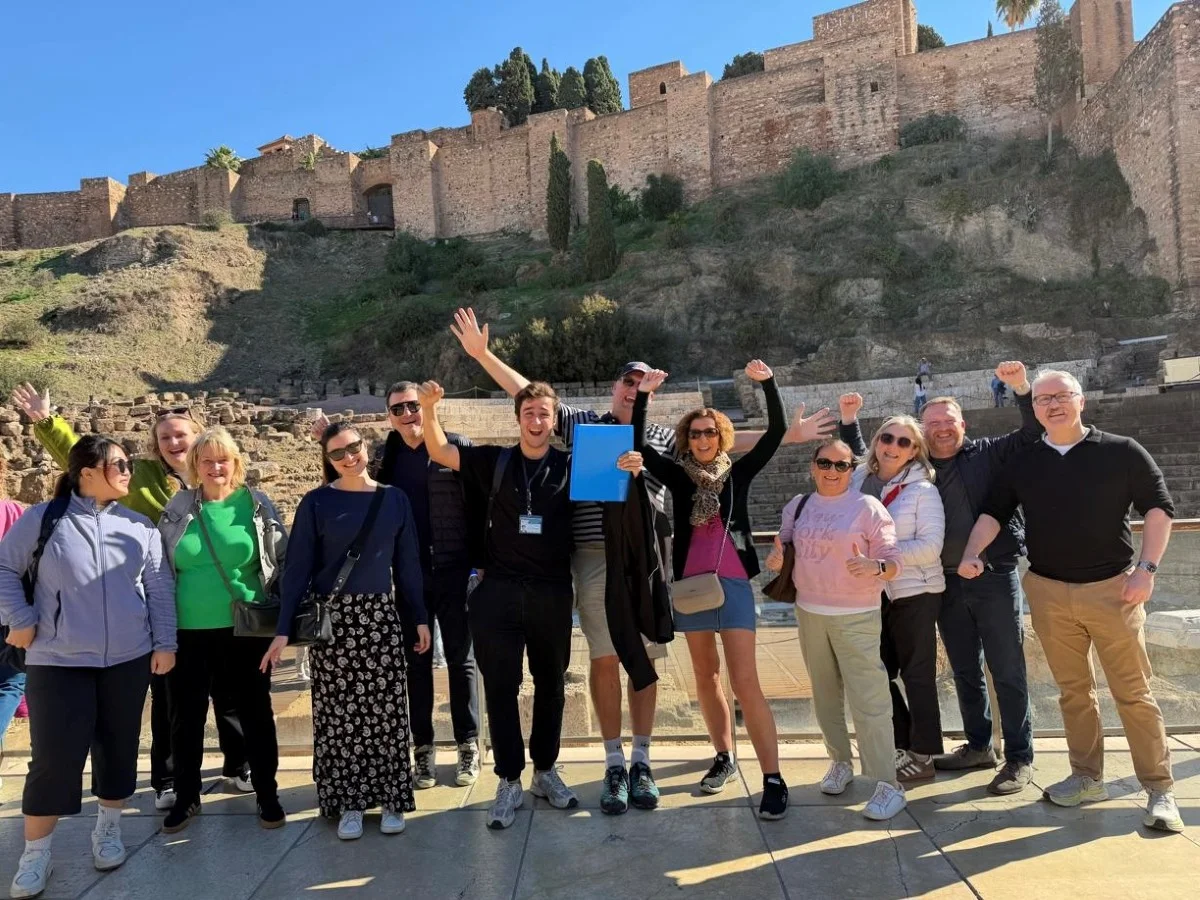
Don’t waste your first morning wandering without context. A Free Walking Tour of Málaga’s historic centre is the single best way to start any trip to the city — and the most efficient use of two hours you’ll spend in Málaga.
In under two hours you’ll cover the Cathedral, Calle Larios, Picasso’s Málaga, the Roman Theatre and the entrance to the Alcazaba — with a licensed local guide who gives you the real history behind each one, including the stories that don’t make it into guidebooks. By the time it ends, you’ll know exactly what you want to go back to, and why.
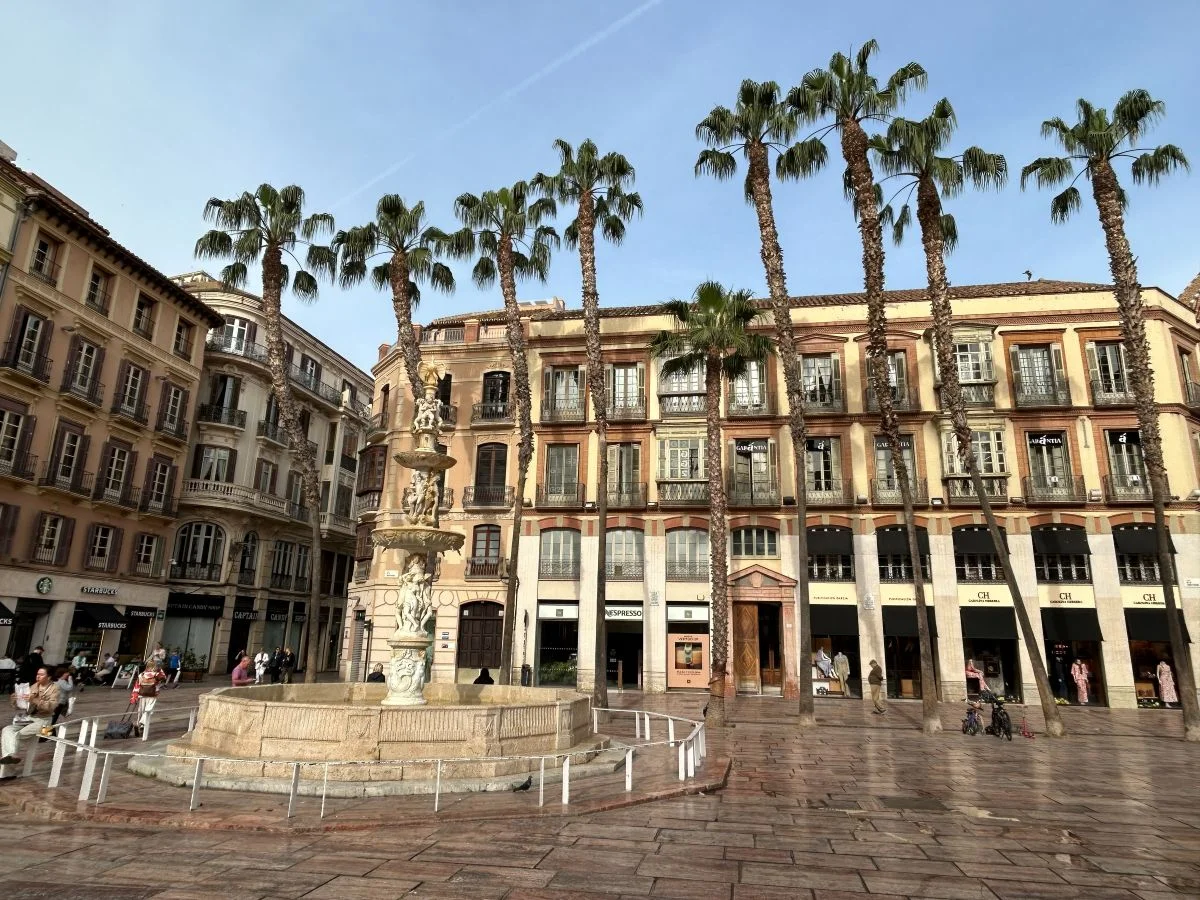
Our Málaga free tour departs daily from Plaza de la Constitución. No booking fee, no fixed price — you pay what you think it was worth at the end. It’s consistently the highest-rated experience in Málaga on GuruWalk and FreeTour.com — and it sets you up perfectly for everything else on this itinerary.
Local tip: Tours run in the morning when the light is best and the streets are quietest. Book your spot in advance — they fill up faster than you’d expect.
Day 1 Afternoon – The Alcazaba and Roman Theatre
One of Spain's great Moorish fortresses — and the ancient theatre buried beneath it
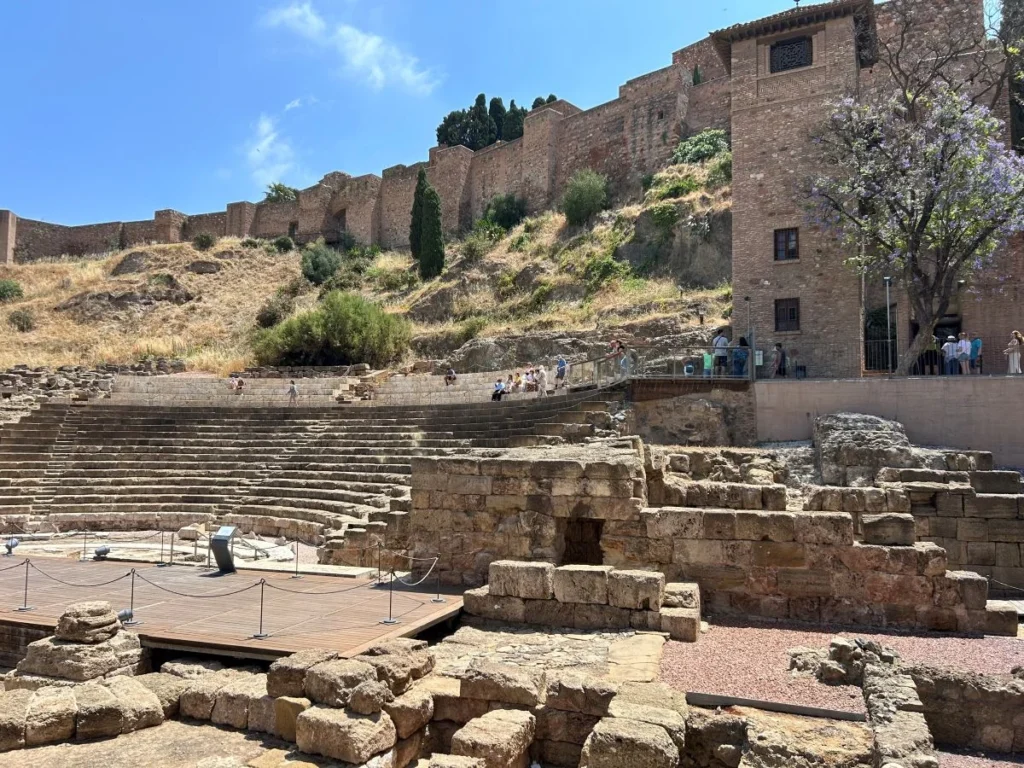
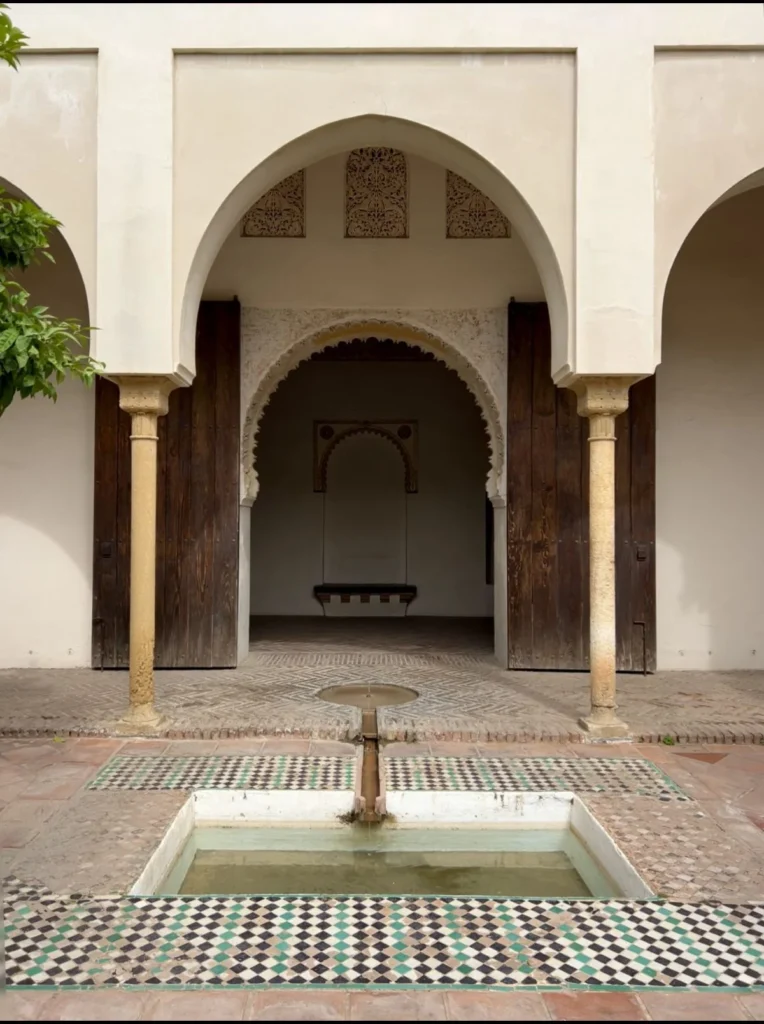
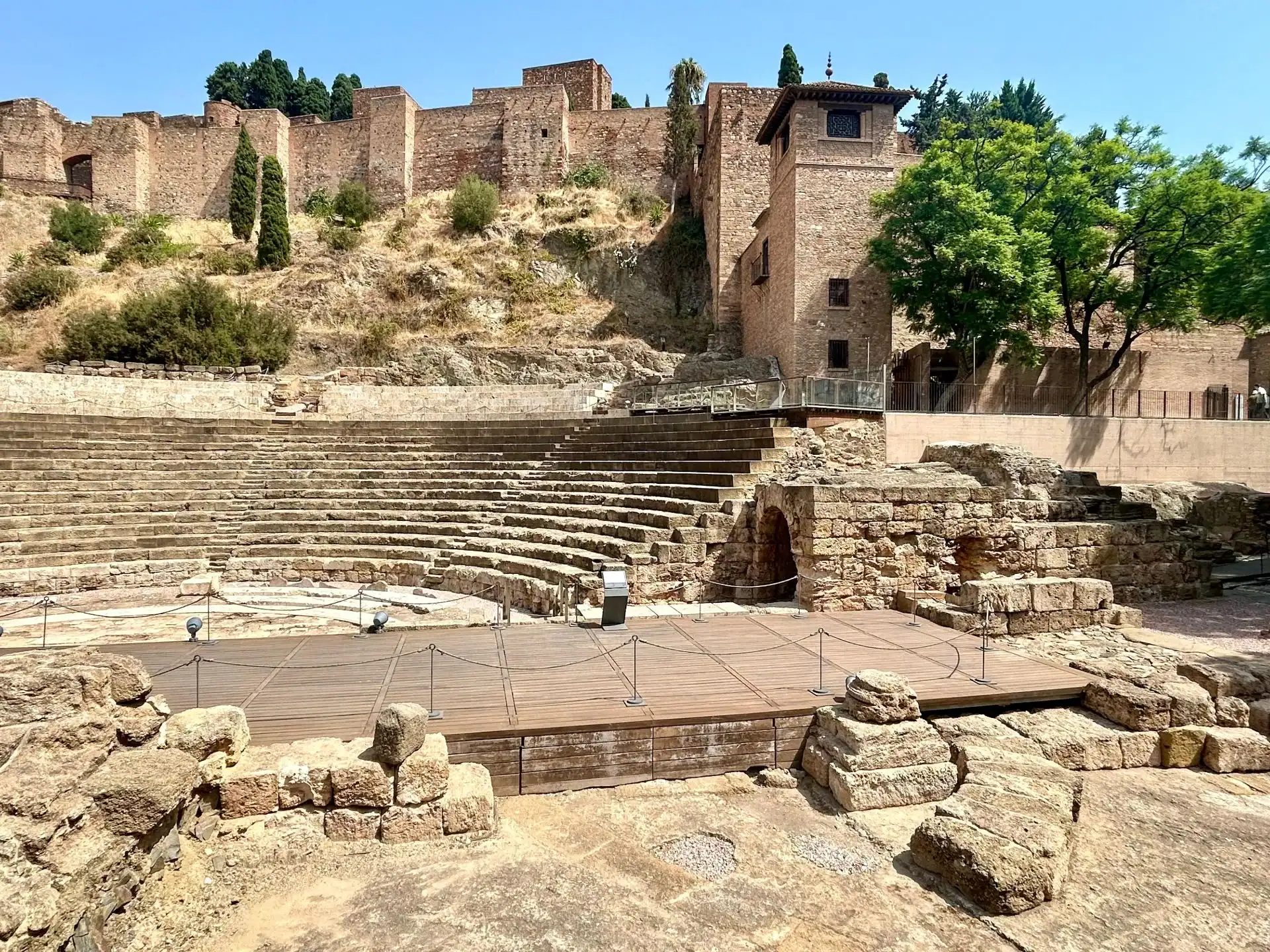
After the walking tour, head straight up to the Alcazaba. You’ve already seen it from the outside — now go in. Built by the Moorish Hammudid dynasty in the 11th century, this hilltop fortress contains royal palaces, ornamental gardens, underground dungeons and some of the best panoramic views over Málaga and the Mediterranean you’ll find anywhere in the city.
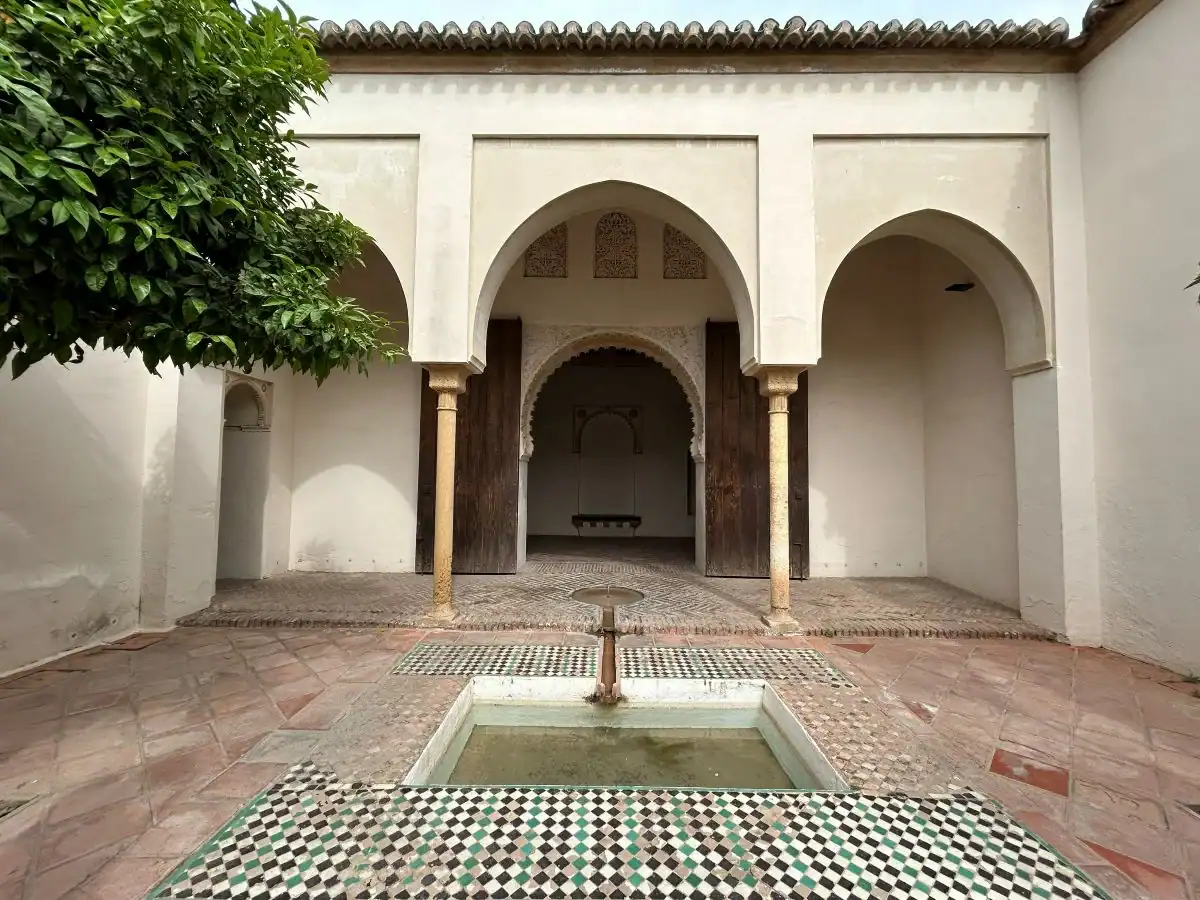
Most visitors spend 45 minutes inside. Give it 90. The Nasrid Palaces in the upper section are extraordinary — intricate tilework, carved stucco arches and intimate courtyards that rival anything in Granada’s Alhambra — and almost nobody reaches them because they turn back at the first set of walls thinking they’ve seen everything.
Entry costs just €7, making it one of the best value monuments in all of Andalusia.
Before you go up, spend ten minutes at the Roman Theatre at the base of the hill. Dating back to the 1st century BC, it once seated over 2,000 Romans — and then disappeared completely, buried under centuries of construction and forgotten for over a millennium. It was rediscovered entirely by accident in 1951 during building works. Today it sits in plain sight, free to visit from the outside, with an interpretation centre explaining its remarkable history.
For the full story of both — including how the Alcazaba was literally built using stones taken from the Roman Theatre — join our Free Tour Alcazaba Málaga & Roman Theatre with a licensed local guide.
Local tip: Visit the Alcazaba between 2pm and 4pm — most people have left and you’ll practically have it to yourself. The light in the late afternoon also hits the stonework beautifully for photos.
Day 1 Evening – Tapas in the Old Town
Skip the tourist restaurants. Here's where locals actually eat.
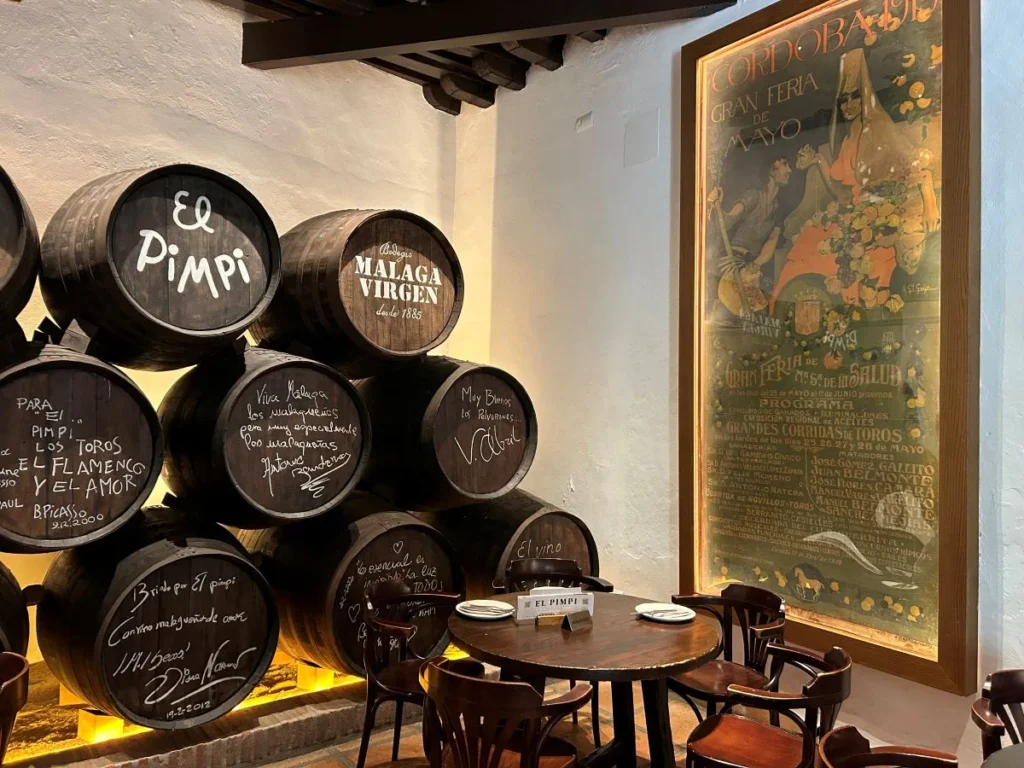
By early evening you’ll have earned a proper meal. Málaga has one of the best tapas cultures in Spain — but you need to know where to go. The restaurants directly around the Cathedral are almost all tourist traps. The real places are a five-minute walk away, in the streets between Plaza de la Merced and the Alcazaba.
What to order on your first evening:
- Berenjenas con miel — fried aubergine drizzled with sugarcane honey. A Málaga speciality that sounds strange and tastes extraordinary.
- Boquerones en vinagre — fresh anchovies marinated in vinegar. The Málaga version is lighter and fresher than you’ll find anywhere else in Spain.
- Espetos — sardines grilled over open fires on the beach. Not available inland, but some old town bars serve them.
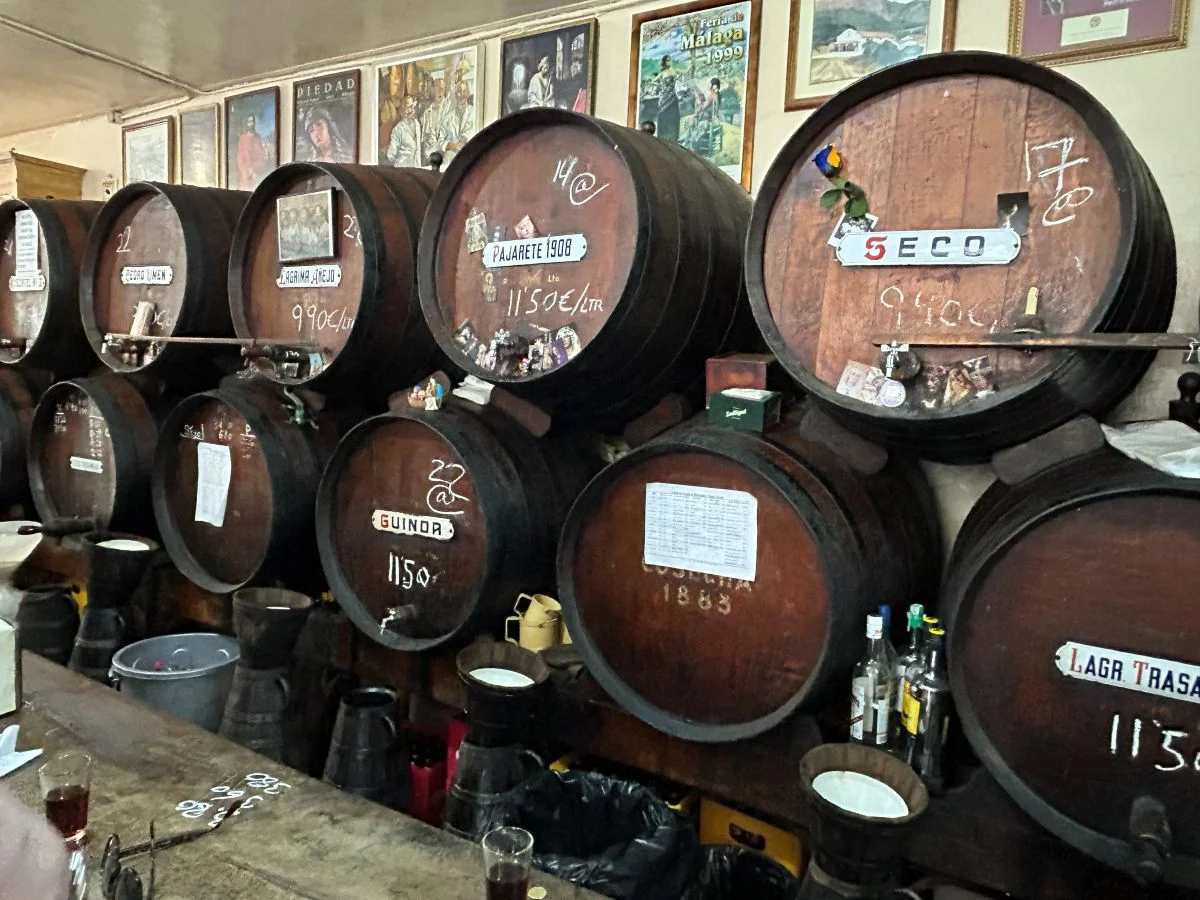
- Málaga dulce — sweet wine produced in the mountains surrounding the city, best drunk straight from the barrel at a traditional bodega. Antigua Casa de Guardia on Alameda Principal has been serving it this way since 1840.
If you want the guided version — with a local who knows every bartender and every dish — our Málaga Tapas Tour runs in the evening and includes food and drinks at every stop.
Local tip: Eat at Spanish times. Locals don’t sit down for dinner before 9pm. If you eat at 7pm you’ll be surrounded by other tourists. At 9pm you’ll be surrounded by Málaga. The difference in atmosphere is remarkable — same street, same bars, completely different experience.
Day 2 Morning – Picasso Museum and the Cathedral
The world's most famous artist was born here. The city hasn't forgotten.
Start Day 2 at the Picasso Museum Málaga when it opens. Housed in the 16th-century Buenavista Palace in the heart of the historic centre, it contains over 200 works spanning Picasso’s entire career — donated largely by his daughter-in-law and grandson. What makes this museum special isn’t just the art — as you move through the rooms you can see original Phoenician and Roman archaeological remains discovered during the building’s restoration. Art history and ancient history in the same building.
Book tickets online the night before. Summer queues at the door regularly run over an hour. Early morning on a weekday is the quietest time to visit — you’ll sometimes have entire rooms to yourself.
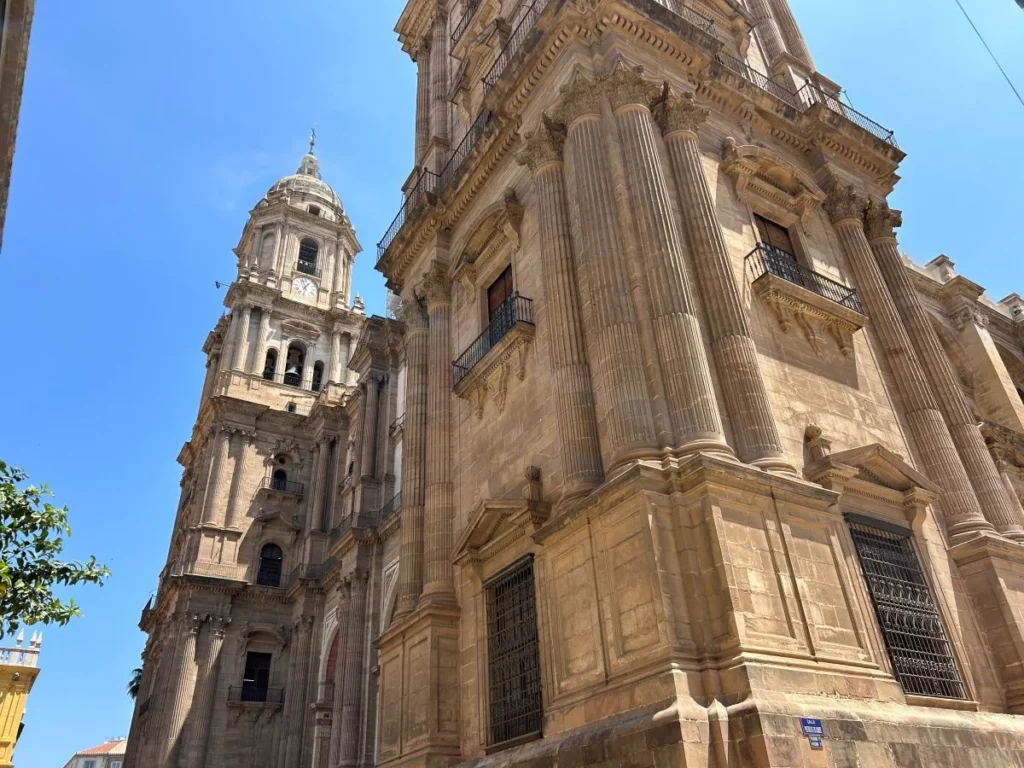
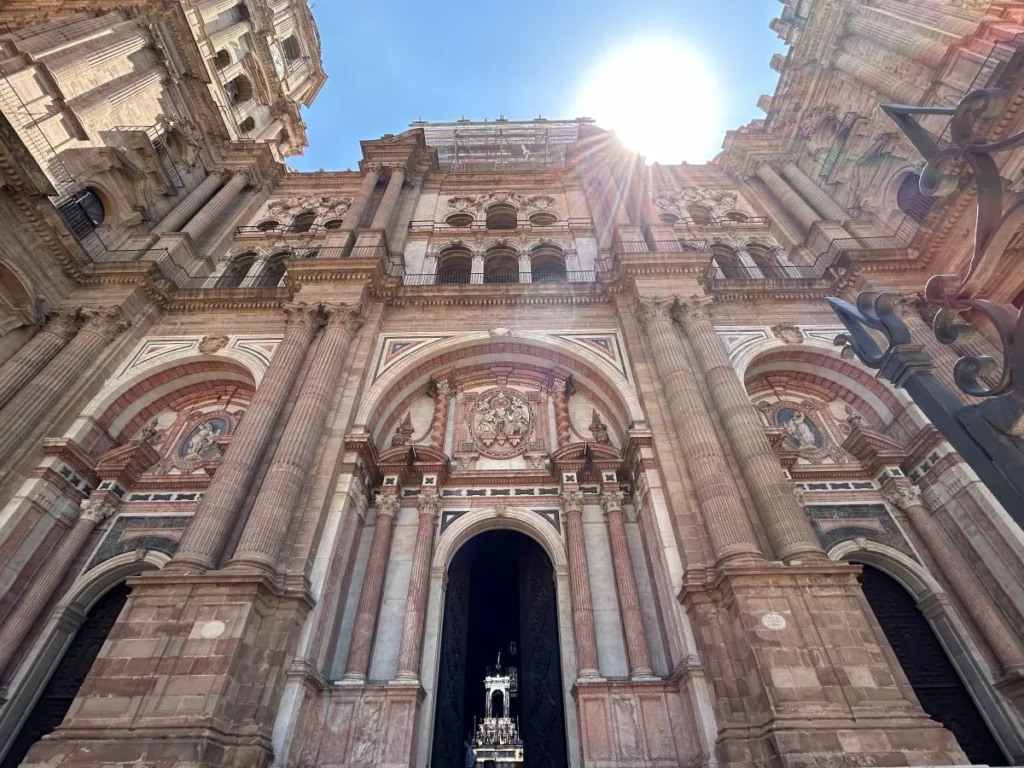
After the museum, walk two minutes to La Manquita — Málaga Cathedral. Known locally as “the one-armed lady” because one of its towers was never finished, the interior is breathtaking: a vast Renaissance space with a cedar wood choir stall considered one of the finest in Spain. The rooftop tour is worth it for the views alone — a completely different perspective over the city’s rooftops and orange trees.
Local tip: The Picasso Museum and Cathedral are within a two-minute walk of each other. Do both in the same morning before the crowds peak around midday.
Day 2 Afternoon – Gibralfaro Castle and La Malagueta Beach
The best viewpoint in the city — followed by the best beach
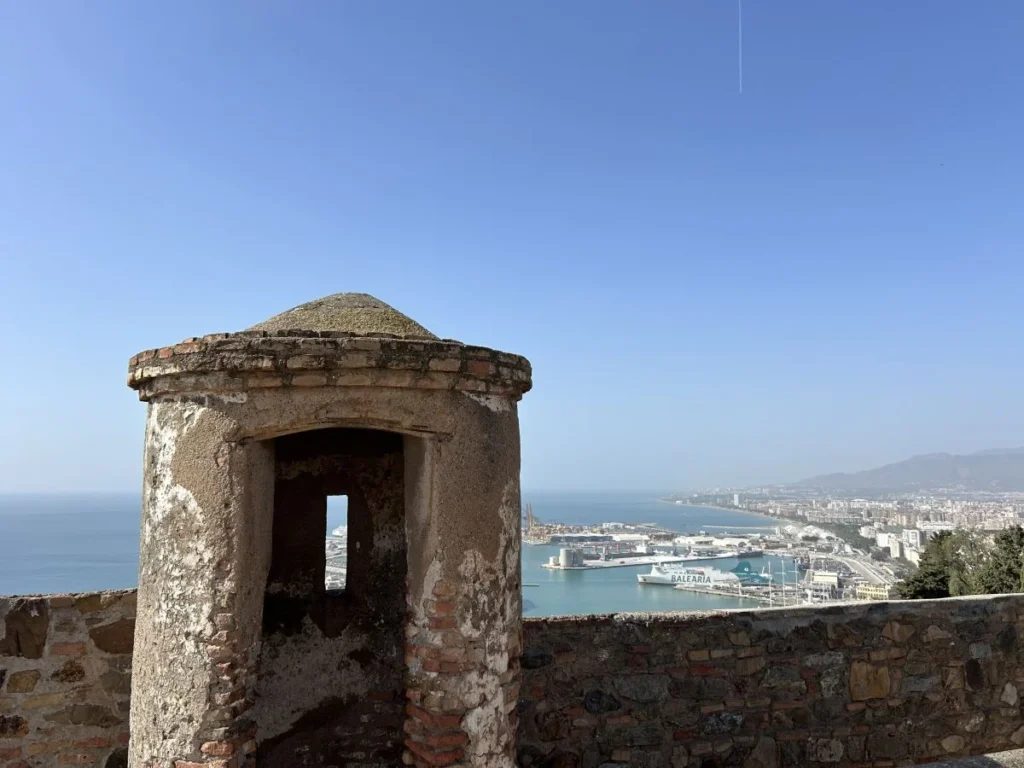
After lunch, head up to Gibralfaro Castle — the highest point in the city. Built in the 14th century on the same hill as the Alcazaba, connected by a long defensive wall called the Coracha, it offers sweeping views over the bullring, the port, the historic centre, the Mediterranean and — on a clear day — the Atlas Mountains of Morocco across the water. It is the single best panoramic viewpoint in Málaga and most visitors never make it up.
Walk up rather than taking the bus. The path through the pine forest takes about 25 minutes from the Alcazaba and is far more rewarding than arriving by road. Take water, especially between June and September. The small bar at the castle sells cold drinks and has a terrace with the best view in the city — sit down for ten minutes before heading back down.
From Gibralfaro, walk down the hill and head to La Malagueta beach — Málaga’s city beach, 15 minutes on foot from the historic centre. It’s one of the few city beaches in Spain where you can genuinely relax without feeling like you’re in a tourist trap. The sand is dark and volcanic, the water calm and clear, and the chiringuitos (beach bars) along the front are some of the best in the city. Come for a swim, stay for a cold beer and a plate of espetos as the afternoon light comes off the water.
Local tip: Gibralfaro in the afternoon means the light falls perfectly for photos looking back over the city. Pair the climb with the beach below and you have the best two-hour combination on this entire itinerary.
Day 2 Evening – Muelle Uno and Centre Pompidou
Málaga's waterfront at its best — and the most unexpected museum in the city
Spend your last evening at Muelle Uno — Málaga’s harbour promenade, a ten-minute walk from La Malagueta along the seafront. The best evening walk in the city: the port, the old lighthouse, the Mediterranean light at sunset, the smell of salt and pine. It costs nothing and it’s one of those walks you’ll remember.
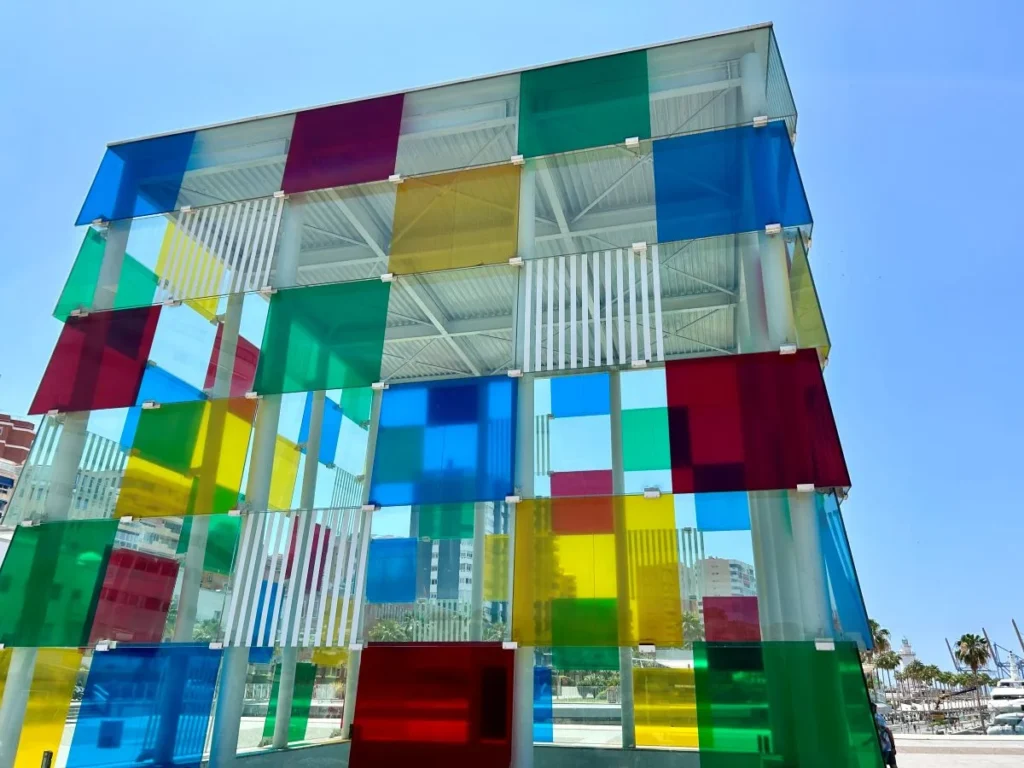
At the far end of Muelle Uno sits the Centre Pompidou Málaga — the first Centre Pompidou outside of France, housed in a striking glass cube on the waterfront. Its rotating collection of modern and contemporary art from the Paris mothership makes for a fascinating contrast with the Moorish fortress you visited yesterday afternoon. Ancient and contemporary, all within the same square mile. Málaga does this contrast better than almost any city in Spain.
Finish with dinner at one of the harbour restaurants as the sun goes down over the water. After two days, you’ll understand exactly why people keep coming back.
Local tip: The Centre Pompidou is open late on Fridays. If your second day falls on a Friday, save it for the evening and go in after 6pm when the crowds have thinned and the light through the glass cube is extraordinary.
Practical Tips for Your 2 Days in Málaga
Everything you need to know before you arrive
Getting around: Málaga’s historic centre is entirely walkable. You won’t need a taxi, bus or metro for anything on this itinerary except possibly Gibralfaro if you don’t want to walk up. The city is flat around the centre and hilly only when you head up toward the castle — comfortable walking shoes are essential.
Best time to visit: Spring (March–May) and autumn (September–November) are ideal — warm, uncrowded and at their most beautiful. Summer (June–August) is hot, busy and expensive but the beach season is in full swing. Winter is mild, quiet and excellent for sightseeing — Málaga rarely drops below 12°C even in January.
Getting there: Málaga Airport (AGP) is one of the busiest in Spain and well connected from across Europe. From the airport to the city centre, take the C1 Cercanías train from the terminal directly to Málaga Centro-Alameda station. It takes 12 minutes and costs €1.80. Trains run every 20 minutes. Don’t take a taxi — the train is faster, a fraction of the price and drops you right in the centre.
Where to stay: The historic centre (Soho, Centro, La Malagueta) puts everything on this itinerary within walking distance. Avoid hotels near the airport or out on the Costa del Sol if you want to actually experience the city.
What to wear Light, breathable clothing year-round. Comfortable walking shoes are essential — Málaga’s cobbled streets are beautiful but unforgiving on thin soles. A light layer for evenings even in summer. Sunscreen from April onwards.
How much to budget: Málaga is one of the most affordable cities in Spain. A glass of Málaga wine at a traditional bodega costs €1.50–€2.50. Tapas are €2–€4 each. The Alcazaba costs €7. The Picasso Museum is €12. Most of the best experiences on this itinerary — the Roman Theatre, the Soho street art, the beach — are completely free.
Local tip: Two days is enough to see the highlights — but Málaga rewards those who stay longer. If you can stretch to three days, add the Mercado de Atarazanas, the Soho art district and a day trip to the Caminito del Rey.
Ready to make the most of your 2 days in Málaga?
Join one of our tours and see the city with a licensed local guide.
Málaga Free Tour
Málaga's historic centre, 3,000 years of history, one licensed local guide. Our free walking tour covers the Cathedral, Larios Street, Picasso's birthplace and the stories in between. Pay what you think it's worth at the end.
Alcazaba & Roman Theatre Free Tour
Go inside one of Spain's best-preserved Moorish fortresses and explore the Roman Theatre. Stunning architecture, sweeping panoramic views over Málaga, and stories that go back 1,000 years.
Tapas Tour Málaga
Forget the touristic restaurants on the main square. We take you where locals eat - a guided food tour through Málaga's best tapas bars and restaurants with food and wine included every step of the way.
Private Tour Málaga
Your own personal local guide, your own pace, your own interests. Whether it's history, food, architecture or all three - we customise the perfect private Málaga tour experience around you and your group.
Frequently Asked Questions
Is 2 days enough for Málaga?
Two days is enough to cover the main highlights comfortably — the historic centre, Alcazaba, Picasso Museum, Gibralfaro and the beach. If you want to go deeper into the food scene or explore beyond the centre, three days is better.
What should I do first in Málaga?
Start with a free walking tour — it gives you the full context of the city in two hours and means everything you do afterwards makes more sense. It’s the best first morning activity in Málaga.
Is Málaga good for a weekend trip?
Absolutely. Málaga is one of the best weekend city breaks in southern Europe — compact enough to explore on foot, with excellent food, history, art and a beach all within walking distance of each other.
How do I get from Málaga Airport to the city centre?
Take the C1 Cercanías train from the airport to Málaga Centro-Alameda station. It takes 12 minutes and costs €1.80. Trains run every 20 minutes. Don’t take a taxi — the train is faster and costs a fraction of the price.
What is the best neighbourhood to stay in Málaga?
The historic centre — particularly the areas around Soho, Plaza de la Merced and the Cathedral — puts everything within walking distance. Staying here means you can follow this itinerary entirely on foot.