
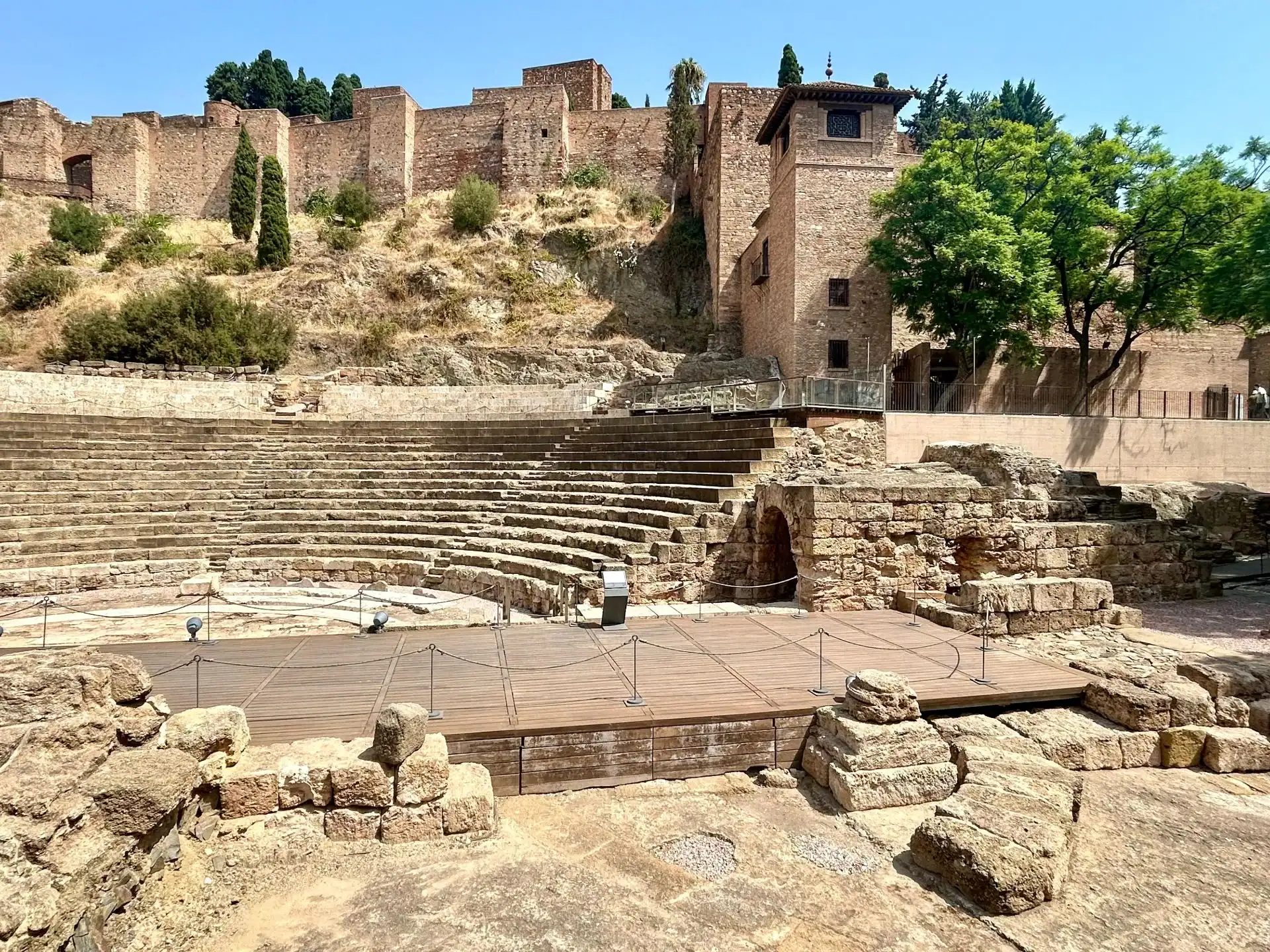
Two days in Málaga covers the highlights. Three days in Málaga is where the city actually opens up — the extra time lets you slow down, skip the queues you’d have rushed through, and get to the parts of Málaga that most visitors never see, like the covered market locals actually shop at and the street art district that’s turned an entire neighbourhood into an open-air gallery.
This itinerary is written by our local guides who walk these streets daily. Days 1 and 2 follow the same efficient structure as our shorter guides — full details are linked below if you want the complete breakdown. Day 3 in Málaga is where this itinerary earns its place.
Day 1 – Historic Centre, Alcazaba & Tapas
The essentials, done properly
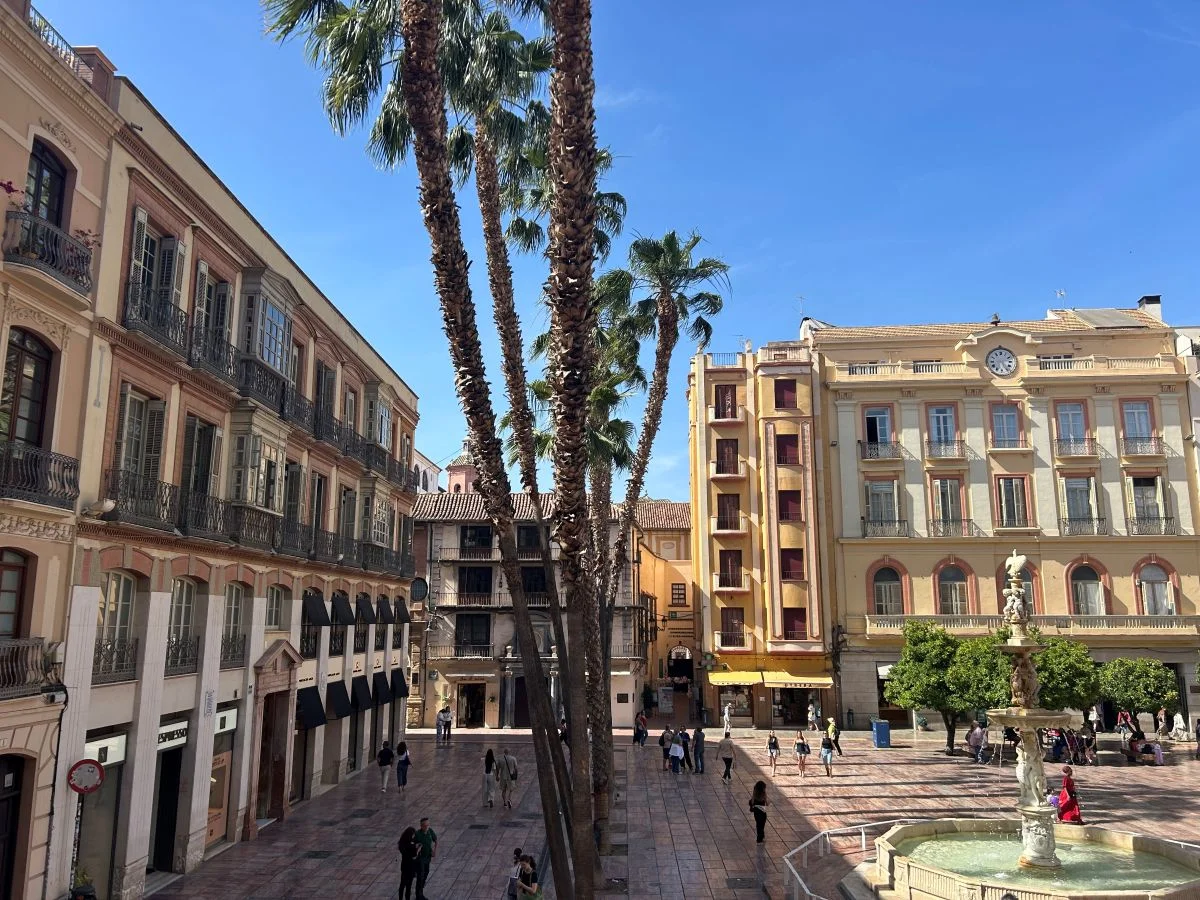
Start your first morning with a Free Walking Tour of the historic centre — it gives you context for everything else you’ll see over the next three days, covering the Cathedral, Calle Larios and Picasso’s birthplace with a licensed local guide.
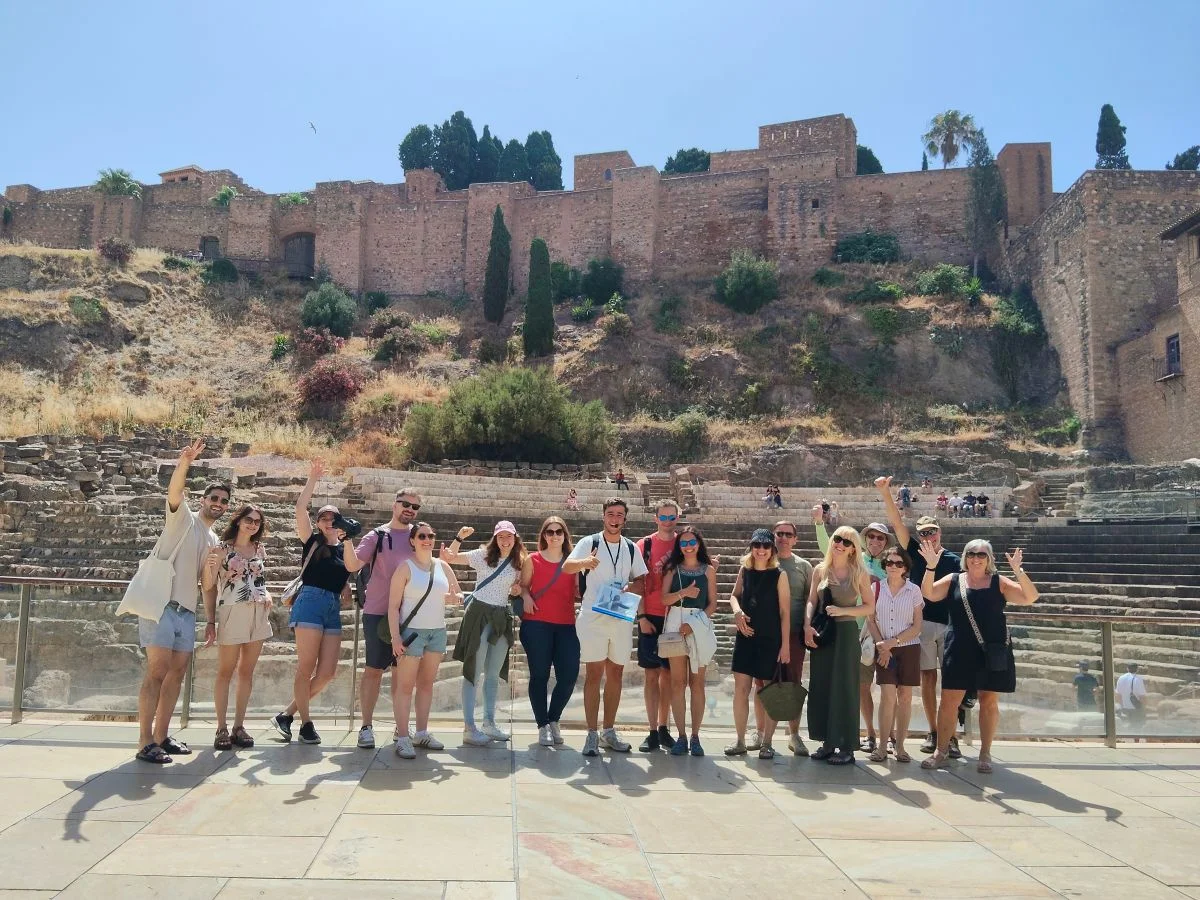
In the afternoon, head into the Alcazaba and Roman Theatre, the Moorish fortress towering over the old town. In the evening, eat where locals eat — the streets around Plaza de la Merced, not the restaurants directly facing the Cathedral.
For the full hour-by-hour breakdown of day one, including what to order and when to go, see our One Day in Málaga guide.
Day 2 – Picasso, Gibralfaro & the Beach
Art, altitude, and the sea
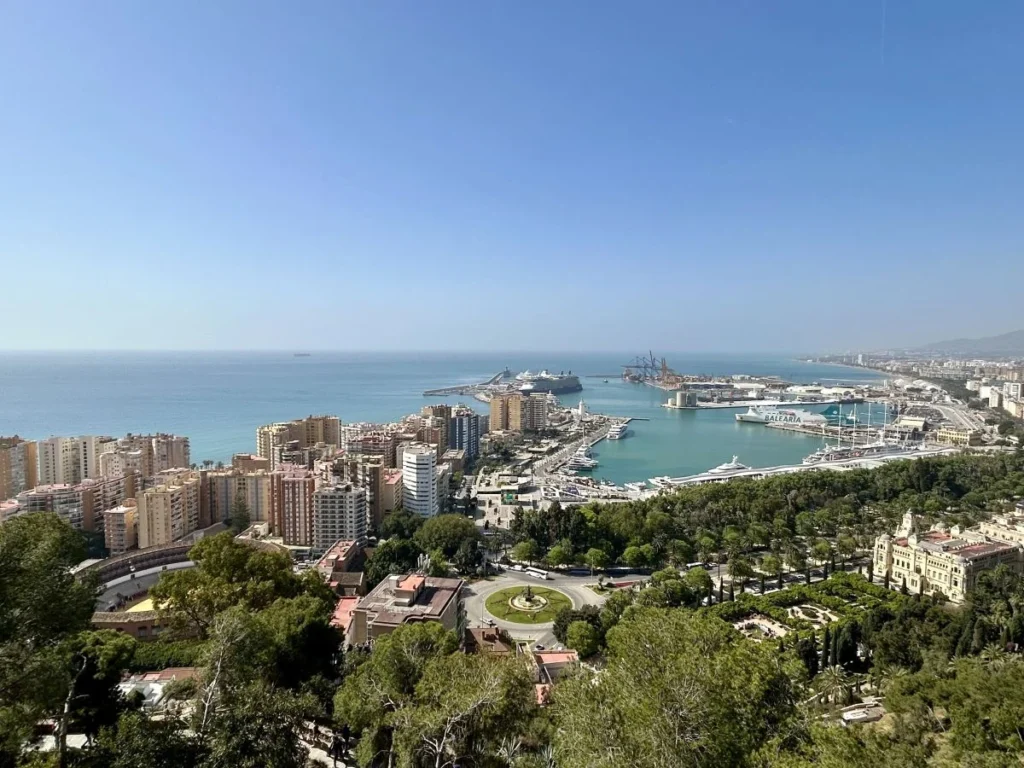
Day two starts at the Picasso Museum, housed in a 16th-century palace with original Phoenician and Roman remains visible inside — book tickets on the official website the night before to skip the queue. From there, climb to Gibralfaro Castle for the best panoramic viewpoint in the city, then head down to La Malagueta beach for a swim and a plate of espetos. Close the day at Muelle Uno, the harbour promenade, finishing at the Centre Pompidou — the first outpost of the Paris museum outside France.
For the complete walkthrough with timing and local tips, see our 2 Days in Málaga itinerary.
Day 3 – Mercado de Atarazanas, Soho & a Slower Pace
The day most visitors never get — and the one you'll remember most
Morning: Mercado de Atarazanas
Skip the tourist breakfast spots and start your third day at the Mercado Central de Atarazanas, Málaga’s 19th-century covered market, built into a former Moorish shipyard — the horseshoe arch at the entrance is a genuine 14th-century remnant, one of the last standing gates from the old city walls. Inside, this is where Málaga actually shops: fish stalls piled with the morning’s catch, jamón hanging from the ceiling, and a handful of small bars serving tapas standing up at the counter alongside locals rather than tourists.
Local tip: Get there before 11am, while the market is still working rather than performing for visitors. Grab a plate of boquerones and a glass of vermouth at one of the counter bars — it’s one of the most authentic five euros you’ll spend in the city.
Midday: Soho, Málaga's Street Art District
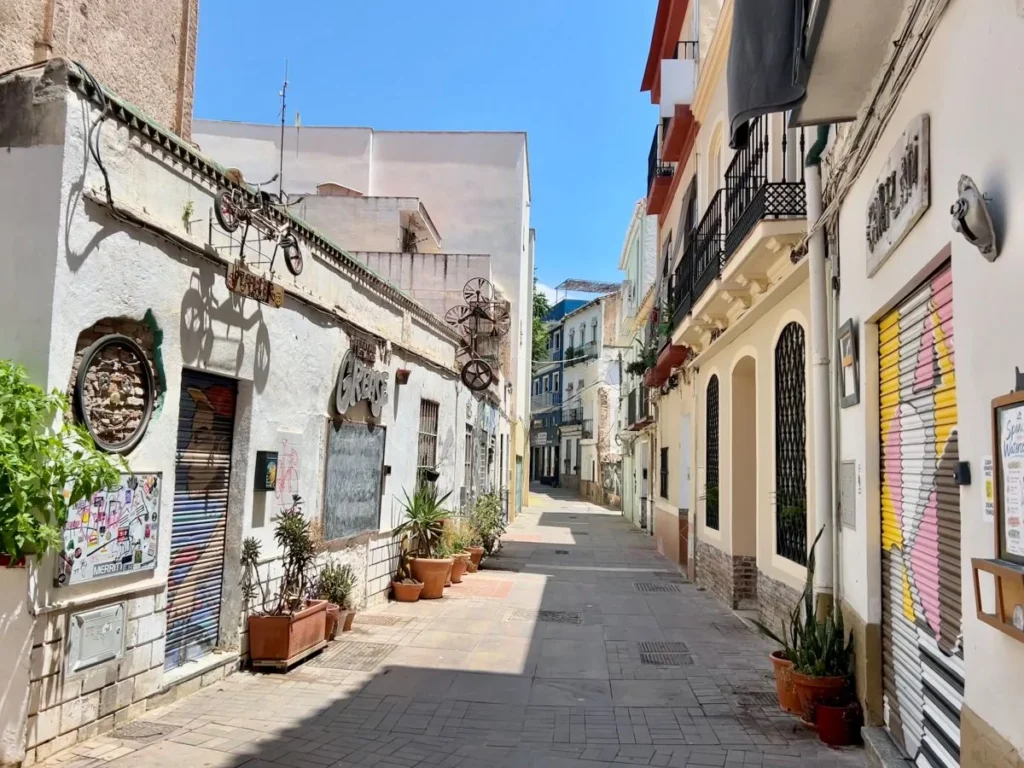
A ten-minute walk from the market brings you into Soho, once a run-down industrial pocket of the city and now one of the most striking open-air street art districts in Spain, thanks to the MAUS (Málaga Arte Urbano Soho) project. Massive murals by international artists cover entire building facades — a giant octopus, portraits several storeys tall, surreal abstract pieces tucked into side streets you’d otherwise walk straight past. Unlike a museum, there’s no route to follow — the fun is in wandering and stumbling onto the next piece.
Local tip: The murals change periodically as new pieces get commissioned, so even repeat visitors find something new. Calle Tomás Heredia and Calle Ancha are two of the densest concentrations of murals to start from.
Afternoon: The English Cemetery or La Concepción Botanical Garden
For your last afternoon, pick one of two very different, very Málaga experiences. The English Cemetery is one of the oldest Protestant cemeteries in Spain, established in 1830 when non-Catholics couldn’t be buried in consecrated ground — today it’s a quiet, overgrown, genuinely moving spot with poet Jorge Guillén and several notable historical figures buried among the cypress trees. Alternatively, the Jardín Botánico-Histórico La Concepción, a 19th-century tropical garden a short taxi ride from the centre, offers a completely different pace: bamboo groves, a small waterfall, and some of the oldest and largest tropical trees in Europe.
Evening: A Perfect Ending to 3 Days in Málaga
Spend your last evening the way locals do — no fixed plan, just wandering back through the historic centre and picking a bar you haven’t already tried. After three days, you’ll know the streets well enough to go off-script: duck into whichever tapas spot looks busiest with locals rather than tourists, and let the evening close itself out.
If you’d rather end on something more structured, a sunset walk along Muelle Uno (if you haven’t already done it on Day 2) makes a fitting last stop — the harbour light in the evening is one of the best free things Málaga offers, and it’s an easy, low-effort way to wind down a trip that’s had a lot of walking in it.
Alternative Day 3 – A Day Trip Instead
If you'd rather leave the city than dig deeper into it
Not everyone wants a third day in Málaga itself — some travellers would rather use the extra day to see the wider region. If that’s you, Ronda, Caminito del Rey, and Nerja are all realistic single-day trips from Málaga, each offering something the city itself can’t: Ronda’s dramatic gorge-top old town, Caminito del Rey’s cliffside walkway, or Nerja’s caves and coastal views.
For the full breakdown of each option, including how to get there and how much time to budget, see our Best Day Trips from Málaga guide.
Practical Tips for 3 Days in Málaga
What to know before you land
Pace yourself. 3 days in Málaga is enough time that you don’t need to rush — build in an unstructured hour or two each day rather than scheduling every minute.
Book ahead for Day 3’s market visit if you want a sit-down meal. The counter bars inside Atarazanas don’t take reservations, but they also don’t tend to have long waits outside peak lunch hours.
Comfortable shoes matter more on day three than any other day. Soho and the market are flatter than the Alcazaba or Gibralfaro, but you’ll cover more total ground wandering without a fixed route.
Getting around remains entirely on foot for everything in this itinerary except a day trip, which typically requires a bus, train, or organised tour depending on the destination.
Ready to make the most of your 3 days in Málaga?
Join one of our tours and see the city with a licensed local guide.
Málaga Free Tour
Málaga's historic centre, 3,000 years of history, one licensed local guide. Our free walking tour covers the Cathedral, Larios Street, Picasso's birthplace and the stories in between. Pay what you think it's worth at the end.
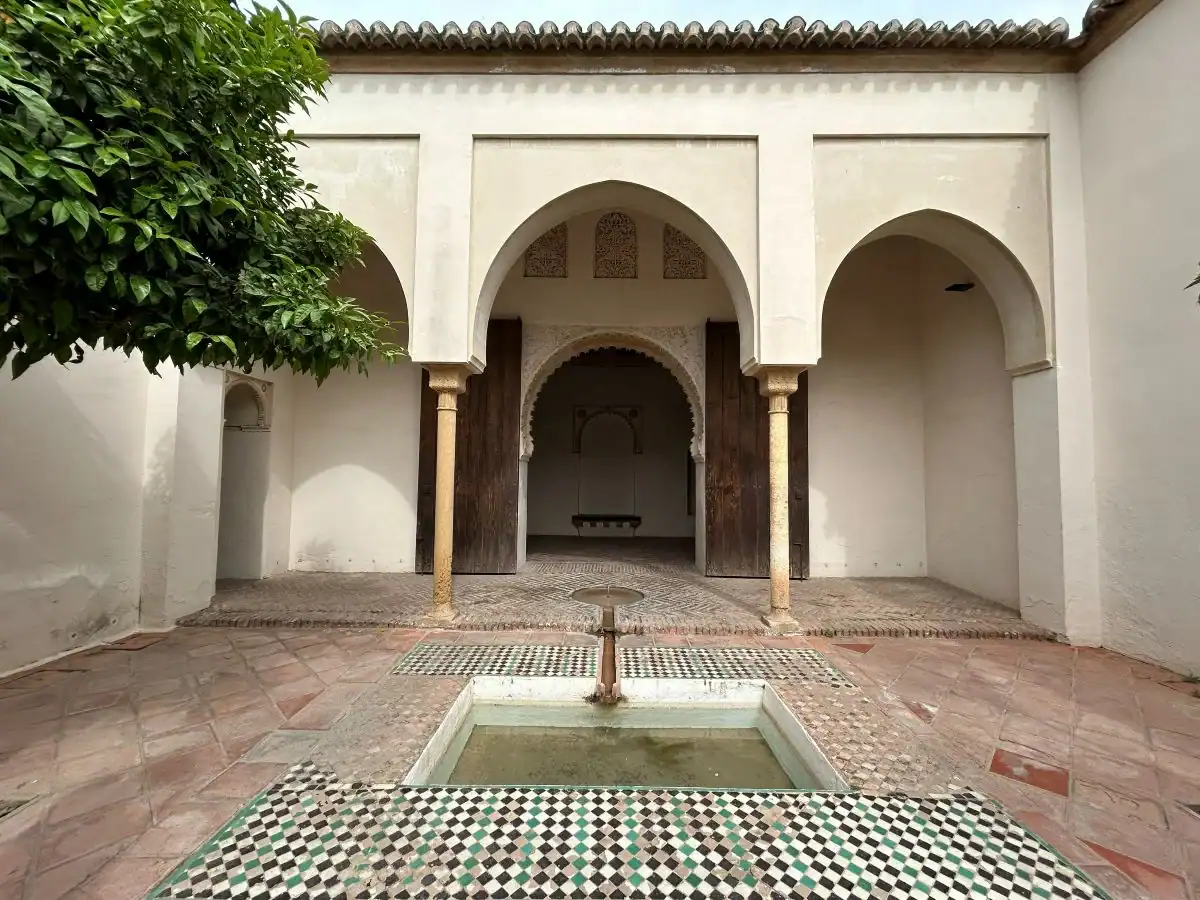
Alcazaba & Roman Theatre Free Tour
Go inside one of Spain's best-preserved Moorish fortresses and explore the Roman Theatre. Stunning architecture, sweeping panoramic views over Málaga, and stories that go back 1,000 years.
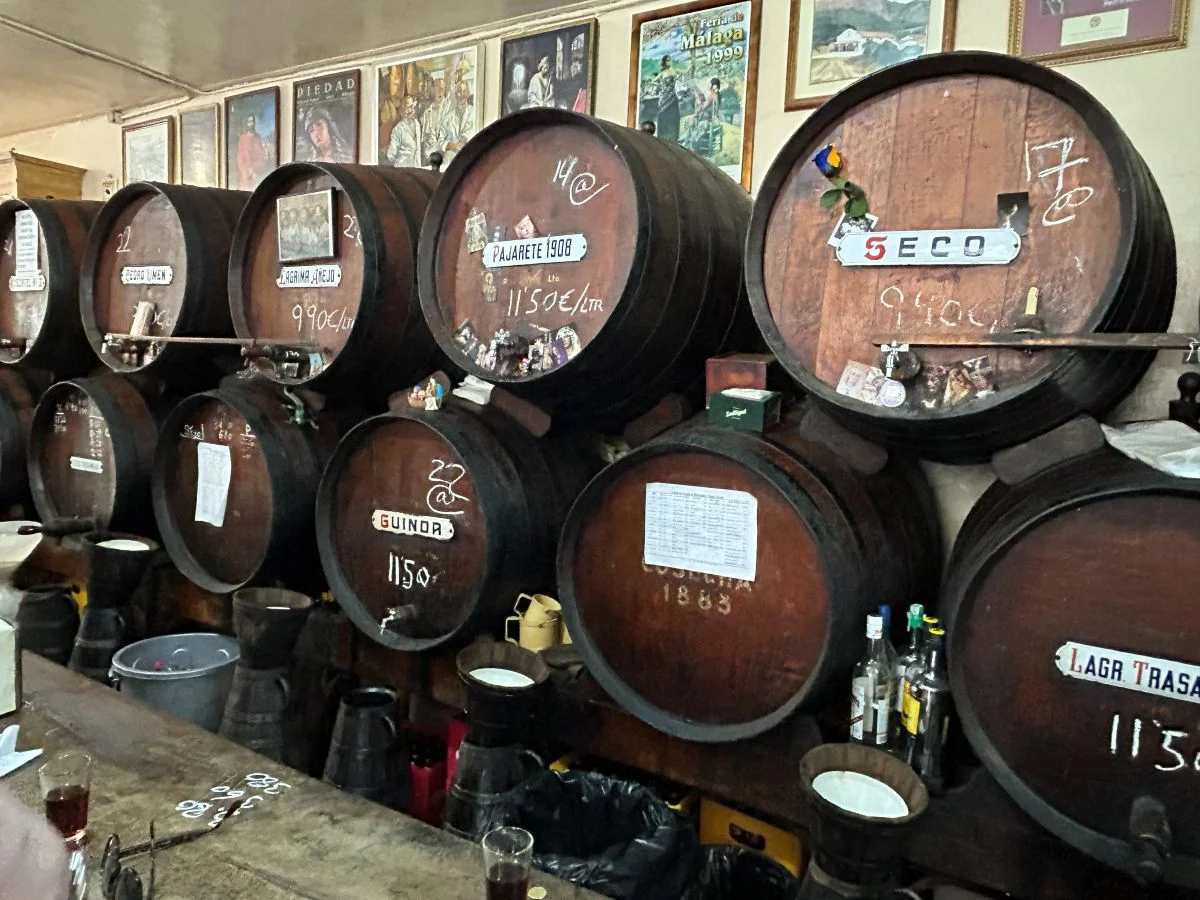
Tapas Tour Málaga
Forget the touristic restaurants on the main square. We take you where locals eat - a guided food tour through Málaga's best tapas bars and restaurants with food and wine included every step of the way.
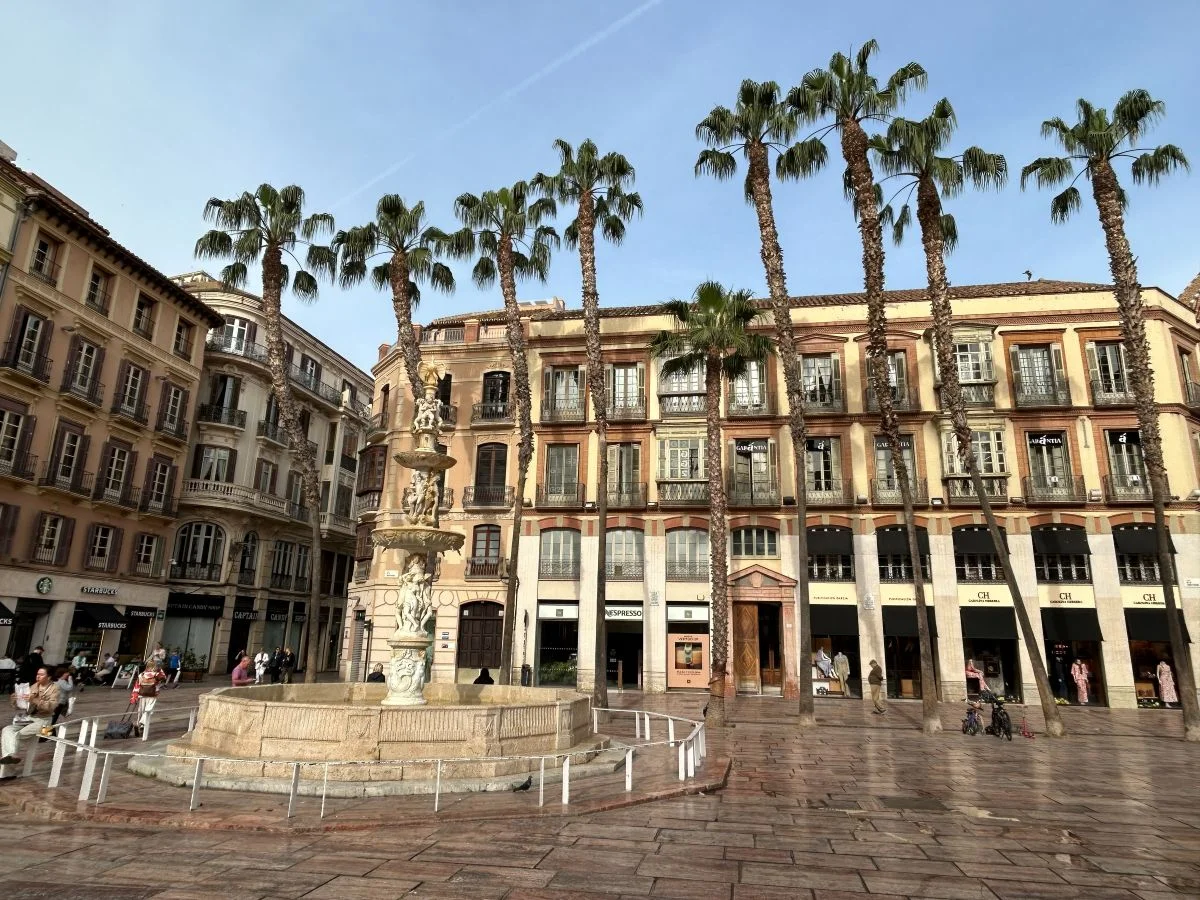
Private Tour Málaga
Your own personal local guide, your own pace, your own interests. Whether it's history, food, architecture or all three - we customise the perfect private Málaga tour experience around you and your group.
Frequently Asked Questions
Is 3 days enough for Málaga?
Yes — three days lets you comfortably cover the historic centre, Alcazaba, Picasso Museum, Gibralfaro and the beach, plus a slower third day exploring the market, street art district, and either a garden or historic cemetery.
What should I do on my third day in Málaga?
Visit the Mercado de Atarazanas covered market in the morning, explore the Soho street art district around midday, then choose between the English Cemetery or La Concepción Botanical Garden in the afternoon.
Should I use my third day for a day trip instead?
It depends what you’re after. If you want to go deeper into Málaga itself, stay in the city. If you’d rather see the wider region, Ronda, Caminito del Rey, and Nerja are all realistic single-day trips.
Is the Mercado de Atarazanas worth visiting?
Yes — it’s a 19th-century covered market built into a former Moorish shipyard, with a genuine 14th-century horseshoe arch at the entrance, and it’s where locals actually shop rather than a tourist attraction dressed up as one.
What is Soho in Málaga known for?
Soho is Málaga’s street art district, home to large-scale murals from the MAUS urban art project, covering building facades throughout the neighbourhood.
